Posts Tagged ‘Chiropractors in New Fairfield CT’

Welcome to Chiropractic Life and Wellness Center's Chiropractors in New Fairfield CT Archive. Here you can learn more about Chiropractic Life and Wellness Center, Chiropractic, and Dr. Brandon Chorney, today's choice for Chiropractors in New Fairfield, CT. Read Dr. Brandon Chorney's Chiropractic Chiropractors in New Fairfield CT for the health of it.

We look forward to serving you! Call - 203-746-6543.

How Chiropractic Supports Young Athletes in New Fairfield CT

Sport Injury Treatment New Fairfield CT

Today’s young athletes are pushing the boundaries of strength, speed, and skill. But with intense training and high expectations comes an increased risk of injury. Whether it’s football, gymnastics, track, or another high-impact sport, proper preparation and care are essential for safety and performance. Fueling Performance Starts Before the Game Preparation is more than showing...

Read More >>

Enjoy the Spine-Chilling Season in New Fairfield with Chiropractic Care

Halloween Back Pain New Fairfield CT

As the season of pumpkins, costumes, and spooky tales approaches, it's time to prepare for the Halloween festivities. However, while you indulge in the thrill of the holiday, don't let back pain cast a shadow on your Halloween spirit. The transition to autumn and Halloween activities can sometimes exacerbate back pain, but the solution lies...

Read More >>

Top Sport Performance Tips

Sports Rehabilitation New Fairfield CT Athletic Performance
Almost everyone knows the symbolic goal of Mount Midoriyama. The pinnacle test which American Ninja warrior contestants will train year round to reach and push their bodies to the edge of better, stronger, and faster. Whether we are active participants or avid watchers, we witness the incredible strides in the performance that our bodies continue to make when the right elements, techniques, and training are applied.

The miraculous nature of our sports performance techniques is not only building strength to strength but maximizing the small or large repair cycle of the human frame to continue to create a top athlete.

Research on the Secrets of Sports Performance

We long to discover and duplicate the secret recipe of a top athlete. We avidly search to find a person or team who can help you build a better stronger body while increasing performance but know the secret to rehabilitate an injured area and rejuvenate the area to better and stronger than before.

A research project published in the September 2005 edition of The Journal of Manipulative and Physiological Therapeutics showed that spinal dysfunction affects reaction times and performance. It was merely able to prove that spinal dysfunction is related to slower and less accurate reaction times and cognitive function.

Another double-blind, randomized, study was also performed on thirty volunteers who had presented with what the researchers called “cervical spinal joint dysfunction.”  This study consisted of a range of computer-based tasks performed by the volunteers to determine various reaction times. Researchers at the New Zealand Chiropractic College examined the volunteers to assess areas of spinal dysfunction.  A baseline note was made on each subject indicating the number of regions of spinal dysfunctions they had. The reaction times of the volunteers were then compared to their number of areas of spinal dysfunctions to see if there was any relationship.

The results showed that there was a connection between the number of areas of spinal dysfunction and certain types of reaction times.  Researchers also noted that the variety of reaction times affected by multiple areas of spinal dysfunction were therefore related to impaired cortical processing and significantly less accurate response selection. They found that the more areas of spinal dysfunction, the more it affected reaction times.

Finally, a follow-on study by the researchers concluded that certain types of reactions times improved with spinal adjustments in regions of spinal dysfunctions.  The ramifications of this study not only supported the effects of chiropractic adjustments on general health but offer the basis of training and rehabilitation benefits to top athletes.

Top Notch Sports Medicine Top Team Tips:

In addition to adding chiropractic and spinal rehabilitative care, top healthcare experts recommend following the tips below to ensure you are well-prepared to play full-out in any sport:

Proper Nutrition

  • Eat a well-balanced diet and avoid skipping meals.
  • Follow dietary rules that are imposed on participants of certain sports, without which optimum performance is unlikely.
  • Maintain a healthy weight while in training.  Be aware of calorie intake to burn ratio.

Proper Hydration

  • Hydration is vital to optimal fitness.
  • Drink at least 8 eight-ounce glasses of water a day.
  • Ask for advice when considering using a good quality sports drink for a source of replenishment.

Stretching and Warm ups

  • Before every event – competition or practice – Warm Up!
  • Jogging, jumping rope, lifting light weights are all good ways to avoid torn or ripped muscles.

Nutritional Boost

  • Multi-vitamins may help avoid a deficiency.
  • B-complex vitamins and amino acids can help reduce pain after contact sports.
  • Thiamine helps promote healing.
  • Vitamin A is good for scar tissue.

Proper Rest

  • Get eight hours of sleep a night to avoid adversely affecting performance.
  • Fatigue can appear as irritability and a loss of interest in the sport.

 Join Our Team!

As many of the top athletes know, being in the top 1% includes having regular chiropractic care.  Having their bodies in optimal health and alignment allows them to achieve optimal results.

Our expert team was designed with that premise in mind.  To play like a pro, you must train, heal, and recover like a pro for maximized potential and ultimate success.

Top Sport Performance Tips

Sports Rehabilitation New Fairfield CT Athletic Performance

Almost everyone knows the symbolic goal of Mount Midoriyama. The pinnacle test which American Ninja warrior contestants will train year round to reach and push their bodies to the edge of better, stronger, and faster. Whether we are active participants or avid watchers, we witness the incredible strides in the performance that our bodies continue...

Read More >>

Back Pain And Arthritis

New Fairfield Back Pain

The American lifestyle over the last few decades has given rise to today’s leading cause of infirmity. Unfortunately, lower back pain is so common that it affects almost 90% of adults. The majority also suffer from lumbar arthritis as a contributing factor to their lower back pain. Spinal arthritis is a degenerative process that develops over time in response to the stresses placed on the spinal joints. Spinal arthritis can cause symptoms from mild to severe back pain as well as spinal stiffness.

Understanding Your Spine

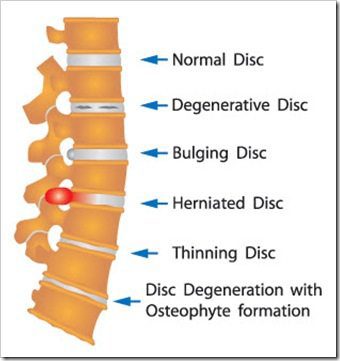
The spine is composed of twenty-four moving segments, known as vertebrae, classified into three regions: cervical (neck), thoracic (mid-back), and lumbar (lower back). Between the spinal vertebrae are intervertebral discs composed of an outer ligamentous layer (annulus fibrosis) and an inner gelatinous layer (nucleus pulposis). The discs are anchored to the vertebrae by the collagen fibers of the annulus fibrosis; allowing movement between vertebrae and the distribution of weight-bearing forces from one vertebra to the next in the spine.

The intervertebral discs often lose their elasticity and hydration with age or as the result of an injury. The loss of elasticity decreases their ability to handle all the load bearing forces of daily activity. When the discs thin, this changes the relative position of the vertebrae and the connective tissues throughout the rest of the spine. Over time, this thinning of the disc could progress to where the vertebra is effectively lying on the next vertebra. The loss of disc space often results in increased pain and decreased ranges of motion.

Ultimately, this pattern of degeneration can lead to microfractures and cartilage injury. Although the body tries to replace and repair the damage, it is often insufficient to overcome the degenerative process without assistance.

As the joint surface erodes, there is an increase in mechanical stress on all the joints of the spine. The body’s natural response to this stress is the formation of new bony outgrowths called osteophytes. In the spine, this process is commonly found in the facet joints and on the edge of the vertebral bodies of the lumbar spine. If combined with compression, bulging discs, and hypertrophy of spinal ligaments the size of the spinal canal may decrease which can lease to the condition of spinal stenosis. Those diagnosed with spinal stenosis often suffer from spinal cord and nerve compression.

Symptoms Of Lumbar Arthritis

The classic symptomatology of arthritis includes joint pain, swelling, and stiffness. Lumbar arthritis often results in lower back or pelvic pain. Arthritis sufferers may have difficulty with mobility secondary to postural changes and decreased flexibility.

As with most forms of osteoarthritis, pain and stiffness are the most noticeable symptoms in the morning. As movement increases over the day, the symptoms tend to subside. In general, if there is no evidence of nerve root compromise, pain from an arthritic spine is localized to the low back with possible dull aching and referred pain in the buttocks.

Patients with degenerative changes resulting in spinal stenosis may experience numbness, tingling, or weakness in the legs due to irritation of the lumbar nerve roots.

The Diagnosis

In-Depth patient history and physical examination will be used to make the diagnosis of lumbar arthritis.

The physical exam will focus on the range of motion within your spine, muscle strength, and reflexes within your legs. Patients with lumbar arthritis will notice pain when bending backward because this places maximal pressure on the osteoarthritic facet joints. Likewise, patients may find that the pain decreases when bending forward because this relieves joint pressure.

An X-ray will likely be ordered to be able to have a detailed look at the bones that make up the lumbar spine. Specifically, your chiropractic physician will look for new bone growth (osteophyte formation) and the narrowing of the intervertebral disc space. If a more detailed look is necessary, an MRI (magnetic resonance imaging)-may be ordered.

What Treatment Options Are Available?

Lumbar arthritis is usually responsive to conservative management.

During an acute attack of low back pain, relative rest that avoids activities that aggravate the symptoms may reduce inflammation. Drinking moderate amounts of water frequently while minimizing caffeinated drinks will also be beneficial in helping hydrate the discs.

After the examinations, your chiropractor and their spinal rehabilitation team may prescribe spinal decompression in combination with rehabilitative therapy. In partnership, the team will design a proper exercise regimen which will be useful for strengthening core muscles and minimizing your back pain.

For long term relief, lifestyle modifications must be undertaken. Lifestyle modifications include weight loss when appropriate as it will have a tremendous impact on reducing back pain due to the lumbar spine bearing the weight of the upper body and weight of the head.

We Can Help!

Our team understands that long-term back pain is not only physically debilitating but emotionally exhausting. To serve our community, we have built an expert team committed to working together harmoniously to help you or your loved ones recapture the quality of life they desire – pain-free!

Chiropractic Life and Wellness Center Skip to content