Posts Tagged ‘Sports Rehabilitation New Fairfield’
Welcome to Chiropractic Life and Wellness Center's Sports Rehabilitation New Fairfield Archive. Here you can learn more about Chiropractic Life and Wellness Center, Chiropractic, and Dr. Brandon Chorney, today's choice for Chiropractors in New Fairfield, CT. Read Dr. Brandon Chorney's Chiropractic Sports Rehabilitation New Fairfield for the health of it.
We look forward to serving you! Call - 203-746-6543.
by Dr. Brandon Chorney | Nov 3, 2018 | Zed

...
Read More >>
by Dr. Brandon Chorney | Aug 23, 2016 | Health Articles
Fall sports season is here! Whether you are a youth player, weekend warrior, or a professional athlete, you can be injured playing any sport. Injuries are caused by a variety of factors including accidents, poor conditioning or training practices, not wearing proper protective equipment or an inadequate warm-up. Some of the most frequent sports injuries...
Read More >>
by Dr. Brandon Chorney | Jul 30, 2015 | Health Articles
The joints of our knees and the leg pains associated can be confusing or frightening sometimes when we hear the medical diagnosis. The actual diagnosis terms can sometimes be more scary than the actual condition.
But do not fear! Below are two common conditions explained simply so that you can begin focusing on the solution rather than the pain.
Patellofemoral Pain
Patellofemoral pain is also known as the softening of the cartilage of your knee cap or “anterior knee pain”. Quite simply this is a big medical word for a conditional pain where the shiny cartilage surface of your patella (knee cap) is softened due to many factors including abnormal pressure across the joint surface or hormonal changes in your body.
This knee pain is primarily located over the front of your knee and is described as a deep aching pain. It is sometimes associated with swelling and is usually worse when your knee is bent for long periods of time such sitting in a car or bus. The pain also worsens with such activities as running, biking, squatting, kneeling or stair climbing either up or down stairs. Most often this condition is associated with mild or moderate swelling of the knee and some people report a grinding feeling in their kneecap. It is more common in young adults, normally female, especially after a growth spurt, or in heavier adults where the knee(s) must carry more weight.
Research has shown that many times this problem can be due to a muscular imbalance of the quadricep muscle whereby the outer quadricep is stronger than the inner quadricep muscle and causes the knee cap to track incorrectly. The muscle imbalance and improper tracking leads to irritation and inflammation on the undersurface of the knee cap and ultimately causes cartilage degeneration. It is usually pretty simple to diagnose the problem, but the key is to look at the feet first!
iliotibial Band Syndrome
Iliotibial band syndrome is due to inflammation of the iliotibial band, a thick band of fibrous tissue that runs down the outside of the leg. The iliotibial band begins at the hip and extends to the outer side of the shin bone (tibia) just below the knee joint. The band functions in coordination with several of the thigh muscles to assist in flexion of the knee joint and to provide stability to the outside of the knee joint. The irritation usually occurs over the outside of the knee joint, at the end of the femur (thigh) bone. The iliotibial band crosses bone and muscle at this point. In proper function there is a bursa between these structures which should facilitate a smooth gliding motion. However, when the band is inflamed, the iliotibial band does not glide easily and normally the pain worsens with continued movement and resolves with rest.
We Can Help!
As experts of the human frame and the bodies mechanics, Chiropractors should be one of your first choices when looking for your healthcare solutions. We are able to help and assist in restoration and rehabilitation of function and alignment of not only your knee and leg but your entire body. Our mission is to educate our patients in the simplest terms so they can understand not only the “how” but the “why”. With this knowledge our goal is that they may be able to maintain their results and build towards optimal health for life.
by Dr. Brandon Chorney | Mar 3, 2015 | Health Articles
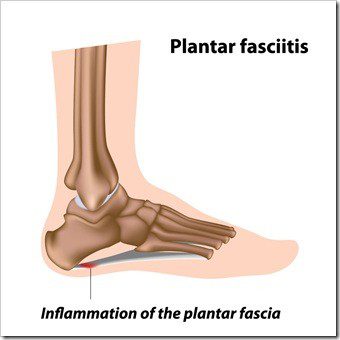
Step. Jump. Leap. Balance and turn. Although these sound like dance steps, they are just some of the simple activities that our feet perform every day. Most of us are completely oblivious to the dependence that we have on our feet and until we are alerted by pain in the foot or heel. This discomfort can...
Read More >>