Posts Tagged ‘Spinal Decompression New Fairfield CT’
Welcome to Chiropractic Life and Wellness Center's Spinal Decompression New Fairfield CT Archive. Here you can learn more about Chiropractic Life and Wellness Center, Chiropractic, and Dr. Brandon Chorney, today's choice for Chiropractors in New Fairfield, CT. Read Dr. Brandon Chorney's Chiropractic Spinal Decompression New Fairfield CT for the health of it.
We look forward to serving you! Call - 203-746-6543.
by Dr. Brandon Chorney | Mar 1, 2016 | Health Articles

Healthcare in the US continues to deteriorate. Unfortunately, like a "boiling frog," we are becoming more complacent as the costs for lower coverage insurance rises. These costs not only affect our wallets, but also the loss of time and productivity spent waiting at the doctor's office. Waiting times can often be an hour or more....
Read More >>
by Dr. Brandon Chorney | Mar 12, 2015 | Health Articles
Healthcare in the US at the moment is in shambles. Rising costs for insurance with less and less coverage. When it comes to our health and health strategies we are being more careful and critical of our options. So what happens when you are suffering with excruciating back pain and you are offered a replacement of a degenerated intervertebral lumbar disc? Do you simply go for it knowing that success is not guaranteed or look at research on other options that have had great outcomes at a much lower cost.
A Medically Noted Case Study
Previous studies have found rehabilitation programs to have efficacy roughly equal to lumbar fusion when chronic patients are randomized into treatment groups.(1-4) In a research study performed by Dr. Christian Hellum, an orthopedic surgeon from the Department of Orthopedics at Oslo University Hospital, and his colleagues attempted to compare the efficacy of a rehabilitation program to surgery with disc prosthesis.(5) Their results were published by the British Medical Journal. The researchers randomized 173 patients into two treatment groups. The surgical intervention consisted of replacement of the degenerative intervertebral lumbar disc with an artificial disc – the ProDisc II Synthes Spine. Rehabilitation consisted of three to five weeks of physical workouts plus an emphasis on patient education (e.g. normal reactions to pain, coping strategies, family and social life, working conditions, physiology of the back, etc.). An interesting aspect of this study is that it only admitted patients who had already received physical therapy and or chiropractic care for at least six months without sufficient effect. Other studies have defined such patient groups as having “failed” conservative care. Participants all had low back pain for one year or more, an Oswestry disability index of 30 or greater, age 25-55, and disc degeneration. The research group pre-defined a clinically significant difference as a treatment effect of 10 in the Oswestry disability index (where treatment effect was calculated as the difference between groups in mean change from baseline). At two-year follow-up, the researchers found the difference between rehabilitation and disc prosthesis surgery not clinically significant. The outcome concluded that the differences between the surgery and rehabilitation groups did not reach statistical significance: general health status, mental summary, fear avoidance belief questionnaire, emotional distress, drug consumption, and return to work. Dr. Christian Hellum further concluded that even with this patient group, it is reasonable to consider rehabilitation. This group consisted of patients with chronic low back pain for more than a year, degenerative disc involvement, and having already received physical therapy for six months or more. He further pointed out the much lower cost of rehabilitation, the higher recuperation time and risk factors of surgical intervention. Surgeries in this study had an 8% complication rate and a 6.5% reoperation rate. Negative sequela of surgery included a lower leg amputation secondary to compartment syndrome, retrograde ejaculation, sensory loss, and radicular pain.
Understanding Your Options
If you are faced with this important decision remember that the decision is yours and to be aware that least invasive first maybe the key to the true path of recovery.
Our expert chiropractic team specializes in spinal restorative care has been designed to offer the best recommendation and make available the full treatments on site in a warm state-of-the-art environment. Call today. We are ready to help you explore your healthcare options.
References 1. Brox JL, Sorensen R, Friis A, et al. Randomized clinical trial of lumbar instrumented fusion and cognitive intervention and exercises in patients with chronic low back pain and disc degeneration. Spine 2003; 28: 1913-21. 2. Brox JL, Reikeras O, Nygaard O, et al. Lumbar instrumented fusion compared with cognitive intervention and exercises in patients with chronic back pain after previous surgery for disc herniation: a prospective randomized controlled study. Pain 2006; 133: 145-55. 3. Fairbank J, Frost H, Wilson-MacDonald J, et al. Randomised controlled trial to compare surgical stabilisation of the lumbar spine with an intensive rehabilitation programme for patients with chronic low back pain: the MRC spine stabilisation trial. BMJ 2005; 330: 1233. 4. Brox JL, Nygaard O, Holm I, Keller A, Four-year follow-up of surgical versus non-surgical therapy for chronic low back pain. Ann Rheum Dis 2009; 69: 1643-8. 5. Hellum C, Johnsen L, Storheim K, et al. Surgery with disc prosthesis versus rehabilitation in patients with low back pain and degenerative disc: two year follow-up of randomised study. BMJ 2011; 342d2786.
by Dr. Brandon Chorney | Mar 5, 2015 | Health Articles
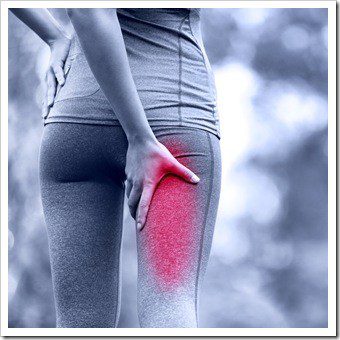
Are you suffering with leg pain that may burn, ache, and radiate to your knee or worse yet be felt down to your toes? The bad news is that it hurts tremendously and you have become tired with the pain of trying to “cure” the problem with your leg. The great news is that it maybe a type of sciatica that is extremely treatable by correcting the cause which is actually not located in your leg.
So if you are ready to get rid of the pain in the “butt” pain distraction read on!
Tell Me More About Sciatica
Sciatica or sciatic pain is commonly referred to as the pain that radiates down from the buttock into the leg. There are many causes for sciatica, however, the most common is irritation of the spinal nerves in the lumbar spine. When the nerve irritation is not coming from the spine but further down the leg it can be difficult to appreciate the difference.
One particular spinal cause of sciatica is called piriformis syndrome. When the piriformis muscle, a small muscle that extends from the sacrum to the outer hip bone, compresses and irritates the sciatic nerve, it causes pain that radiates along the sciatic nerve in the buttocks into the back of the leg often producing lower back pain. Piriformis syndrome can be painful, but it is seldom dangerous and rarely leads to the need for surgery. Most people with this condition can reduce the pain and learn to manage the problem.
What Causes Piriformis Syndrome?
Piriformis syndrome may be due to an overuse injury of the piriformis muscle or from a trauma to the muscle itself by a blunt force or fall.
Overuse of the piriformis muscle is a factor that often occurs in athletes such as bicyclists, rowers, and runners, as well as any athlete that repetitively engages in forward moving activities. The condition can often be avoided by performing proper lateral stretching and strengthening exercises.
What Are the Symptoms?
Piriformis syndrome causes pain primarily along the sciatic nerve, along with tingling and numbness, which may extend down to the knee. The pain radiating into the buttocks, thigh and leg and often increases when engaging in normal activities such as walking or sitting for longer periods of time. There may also be tenderness in the area of the sciatic nerve. The pain is most often one sided affecting primarily the buttocks and leg but can often cause increased lower back pain.
How is Piriformis Syndrome Differentiated from Sciatica?
It is difficult to immediately diagnose piriformis syndrome as the related symptoms are virtually the same as sciatica and most often the diagnosis is made by exclusion. Symptoms are the same as those in sciatica, except that there is no compression of the spinal nerves. A medical professional will take a full medical history and perform a physical examination, including manual tests to see if the movement of the piriformis muscle causes sciatic pain. Questions will be asked about activity levels, what increases and decreases the pain, where the pain is located and other questions that may indicate the source of the pain. An X-ray, CT scan, MRI, ultrasound or EMG may be used in order to rule out other causes of pain if warranted.
What are the Types of Treatments for Piriformis Syndrome?
Treatments for piriformis syndrome may include rest, a reduction in the activity or exercise that caused the injury or aggravates the condition, heat and cold therapy, physical therapy, stretching exercises, core strengthening exercises, massage therapy, or ultrasound. Gait correction and orthotics may also be a recommendation to help the piriformis muscle to relax and heal.
We Can Help!
If you experience sciatic nerve pain, it is best to consult with a medical professional to determine the source of the pain.
Our expert team members are highly specialized spinal and body mechanic specialists. Our focus is to help rehabilitate and restore your body to optimal function. In order to achieve our high success rate we have designed our state-of-the-art facility with an expert team who will be able to achieve the individual care that you might for your ultimate success.
Have questions? Call today! Our team is ready to answer all of your important questions and help get you back to the quality of life your desire – pain free!