Posts Tagged ‘Physical Medicine New Fairfield CT’

Welcome to Chiropractic Life and Wellness Center's Physical Medicine New Fairfield CT Archive. Here you can learn more about Chiropractic Life and Wellness Center, Chiropractic, and Dr. Brandon Chorney, today's choice for Chiropractors in New Fairfield, CT. Read Dr. Brandon Chorney's Chiropractic Physical Medicine New Fairfield CT for the health of it.

We look forward to serving you! Call - 203-746-6543.

Sports Performance For Athletes of All Ages

Athletics New Fairfield CT Sports Injury
Our society for the most part lives for the exhilaration of endorphins that we release as we strive for the goal line of victory.  We simply love winning.   Our addiction will often be the force that drives us to the next challenge.  We know that our win is never based on “good luck” but our preparations meeting opportunities for victory.  But as with all athletics there is also an inherent risk of injuries not based on “bad luck” but other unfortunate circumstances.

If A Sports Injury Happens

At the time of injury most often we are upset with ourselves, the circumstances and want answers to our questions:

  • When can I start exercising again?
  • When can I get back to my sport?
  • What can I do to prevent this from happening again?

The answers to these questions are relatively straightforward. But for some, injuries continue to happen. Which leads us to our next key question:

  •  Why does this keep happening to me?

This question is the hardest to answer. Some athlete’s injuries may occur even when they are doing the things that they are supposed to be doing.  Although challenging, it is imperative to continue to try to discover the underlying causes to better prepare and build strength for the next opportunities for greatness.

The “Why”

If we dig deeper, we’ll find that there are three primary sources of training injuries: (1) under-preparation, (2) over-training, and (3) lack of focus.
Training sounds pretty simple on paper.  Just eat right, sleep well, and lift a little bit more weight every workout. But every workout takes place in real life, and real life can make training pretty hard. Optimal training only occurs when daily life doesn’t get in the way.
Training like an athlete while working a full-time job or going to school is not easy, but fixing weak points in your habits and lifestyle can help avoid training setbacks and plateaus.
The first training injury most often experienced is under-preparation.  Under-preparation means doing things you’re not ready to do. For example, people who have never done aerobic exercise go out and try to run five miles, or people who have never done strength training go to the gym and try to lift weights that are too heavy. These exercise patterns can be dangerous, physically, and may directly lead to injury.
Remember a 16-year-old teenager has some leeway and can get away with making a variety of training errors. This leeway may even be true for those who are in their mid-20s, but persons who are older need to train on a trajectory. Sound principles include starting slowly, starting with the basics, and making sure to include rest days in your training program. Build up your strength and stamina. Doing more than you are ready for will send you straight to your chiropractor’s office or even to the hospital.
Remember exercise can cause muscle and joint pain. The severity of the soreness and how long it takes to recover depends on diet and lifestyle, as well as the kind of exercises performed.

Could I Be Over-Training?

The second most often cause for injury is over-training.
Over-training means doing too much. Most of us are guilty of this. For example, you love to run, you build up your weekly mileage to a good level, but then you keep piling on the distance.  Then all of a sudden you’ve got a stress fracture in your leg or a severe strain of a calf muscle.  
The key is to train smart and to be aware of the possibility of over-training.  The temptation to do more is always there, but the result is never good. The short-term gratification is completely outweighed by the frustration and loss of conditioning resulting from injury-enforced down-time.

Clear the Mechanism

Many injuries happen during regular training because the person’s mind has wandered off from a life distraction or lethargy.
When people pay more attention to the TV or their incoming text messages than they do to the equipment they’re using or the weight they’re lifting, the result can be an injury, sometimes a bad one.  In fact, you’re very unlikely to sustain an injury during normal training if you’re completely focused. Maintaining focus should be a central part of the discipline of training.
But what about lethargy and fatigue?
The occasional all-nighter won’t have a long-term effect on performance, but consistently poor sleep will.  To ensure laser focus in mental acuity aim for six to ten hours of sleep every night and follow these guidelines for a healthy sleep environment:
A healthy sleep environment is:

  • A slightly cool room tends to facilitate sleep.
  • Turn off electronic devices.  Smartphones and tablets just before bed will disrupt melatonin secretion, leading to a more difficult time falling asleep.
  • Ears don’t close as eyes do. Even if you sleep through the night, loud noises can still impair sleep quality.
  • Caffeine-free. Avoid any compounds that impair sleep and lower sleep quality.
  • Where you sleep and how long you sleep for should be the same from night to night.

Ready to Learn More?

A big part of our sports performance and rehabilitation process is the acquisition of knowledge.  In the realm of exercise and fitness, some personal knowledge of biomechanics can go a very long way toward preventing injuries.
Our expert team has been designed to help not only rehabilitate sports injuries through Chiropractic and other rehabilitative care but to help you learn more about human biomechanics and how to achieve your optimal physical performance.

Avoid Joint Replacement Surgery

Back Pain New Fairfield CT Joint Replacement

As we get older, we begin to find signs of age.  Our skin is not as firm. We are not as flexible. We slow down and actually acknowledge we are in pain.  But what happens when our joint pain begins to become so excruciating that we are limited in our day to day activities? Unfortunately...

Read More >>

Are You Benched With A Frozen Shoulder?

Neck Pain New Fairfield CT Frozen Shoulder

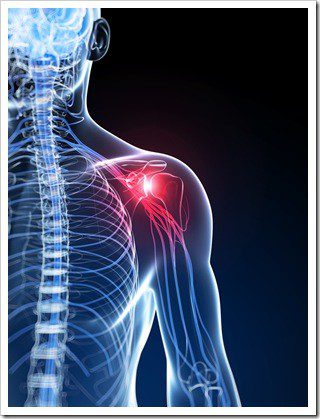
Fabulous Spring is here!   At this time of year, we should be in full swing and enjoying the benefits of the sun and outdoor activities. Unfortunately many of us are sitting on the bench or taking medications to play through our neck pain and what is described as a "frozen shoulder". What Exactly is...

Read More >>

Could I Have Sciatica?

Leg Pain New Fairfield CT Sciatica

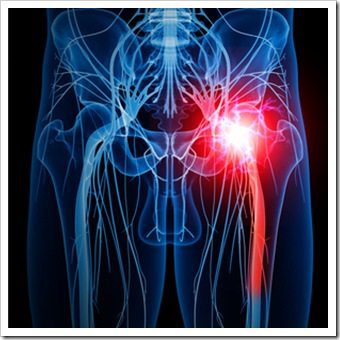
Does every step you take cause you pain that radiates down your leg or legs? Have you become depressed with the pain or been through a series of pain injections to block this pain? If so, read on. Understanding A Cause - The Sciatic Nerve Your sciatic nerve is the longest and widest nerve in...

Read More >>

Making A List Checking It Twice For Holiday Travel

Low Back Pain New Fairfield CT Driving Pain
Buckle up, our traveling season is upon us. Despite the saying “getting there is half the fun”, planes, trains, and automobiles can put a real strain on our holiday fun this season.  So let’s start this season off right, and follow these tips to survive the physically demanding prospect of traveling to your holiday destination even if your final destination is to just relax.

The Warmup

Travel should be looked on as a form of strenuous exercise that requires a period of warming up and cooling down. Warmup and stretch before you travel, and cool down with a brisk walk when you arrive to reinvigorate your hamstring and calf muscles.

Highway Miles

  • Seat Comfort: Adjust the seat so you are as close to the wheel as you can be while still feeling comfortable. Keep your knees just a little bit above the hips.
  • Back Support: Use a back support if the seat does not provide adequate support by design. A lumbar support will help reduce the risk of lower back pain and injury. A proper fitting support should be widest between the lowest ribs and the waist.
  • Keep Alert and Avoid Stiffness: Exercise your legs while driving to keep the blood flowing and limit any swelling or pain. We recommend counting to 10 while spreading your toes wide then counting to 5 while tightening your calf muscles. Follow this process with each of mucsle groups including your thigh muscles and your glutes (butt). Don’t forget to roll your shoulders back and forward (keeping your hands on the wheel!) along with stretching your neck.
  • Hands On the Wheel: Alternate holding the wheel with your hands at the 2 and 7 o’clock positions, and then the 10 and 5 o’clock positions.
  • Avoid Vice Grip: Try not to grip the wheel too tightly. The vice grip will reduce your circulation and increase fatigue in the muscles of your hands, wrists and arms.
  • Look Around: Vary your focal point to reduce eye strain and headaches, but keep your eyes on the road and don’t you dare text!
  • Rest Stops: Take frequent breaks from driving; remember that fatigue behind the wheel can be extremely dangerous.

Sky Miles

  • Onboard Luggage: Bags that are heavier than 5-10% of your body weight should ideally be checked in rather than carried on. But sometimes the added price out weighs back safety, so if lifting heavy bags into overhead compartments make sure you stand directly in front of the overhead and do not stretch or twist your back or neck when lifting.
  • Another Luggage Space to Fill: Under the seat luggage should not be forced in using feet or hands while standing, which can cause muscle spasms given the confined and awkward space between the seats. Instead, sit down first, then push it in using both your hands and feet.
  • Now the Ergonomically Incorrect Seats: Airline seats are incredibly spine-unfriendly. Our suggestion for long haul air travelers is that when you are investing in a neck roll to also invest in a lumbar roll. Can’t find one? Grab a small hand towel that you can roll and place in the small of your lower back.
  • Keep It Moving: While traveling move about in your seat frequently to keep the blood flowing and guard against cramps and pins and needles. Massage your thighs and calves, then push up with your toes to shift your knees up and down. Use a bag to raise your feet higher.
  • Air Flow: Don’t blast yourself with the overhead air vents which can cause your neck and shoulders to tense.

Car Seats and Kids:

  • Use an approved car seat appropriate to the age of the child when traveling in a car.
  • Infant car seats should always face rearwards so that any impact is spread around the back and shoulders and not taken directly by the neck.
  • A car seat should not be used in the front seat of a car where an airbag could deploy into it. Similarly, if the rear doors or the rear of the front seats are equipped with airbags, position the child seat in the center of the rear seat to avoid it being hit by any of them.
  • Secure the car seat as per instructions and make sure it is properly fixed in place and cannot shift. The seat should be at a 45-degree angle to properly support the child’s head.
  • Traveling by air, take your FAA approved car seat. Small children will be safer in a car seat rather than your lap. Your back will also thank you.

Get Bonus Miles

Before you head out to your travel destination, this season make sure to add a spinal health checkup to your list of preparations! We will make sure you are in tip-top condition so you may enjoy every minute of your holiday!

Chiropractic Life and Wellness Center Skip to content