Posts Tagged ‘Pain Relief New Fairfield CT’
Welcome to Chiropractic Life and Wellness Center's Pain Relief New Fairfield CT Archive. Here you can learn more about Chiropractic Life and Wellness Center, Chiropractic, and Dr. Brandon Chorney, today's choice for Chiropractors in New Fairfield, CT. Read Dr. Brandon Chorney's Chiropractic Pain Relief New Fairfield CT for the health of it.
We look forward to serving you! Call - 203-746-6543.
by Dr. Brandon Chorney | Feb 28, 2017 | Health Articles
 Are you sitting on the sideline for some of your favorite activities due to a shoulder injury that is making many routine activities challenging and painful? Or have you played through telling yourself it will heal or you will address later?
Be warned! It could be an injury to your rotator cuff! Your shoulder injury that may have started off as a minor injury could now be leading to a larger one where the repair process is more substantial.
What Is The Rotator Cuff Exactly?
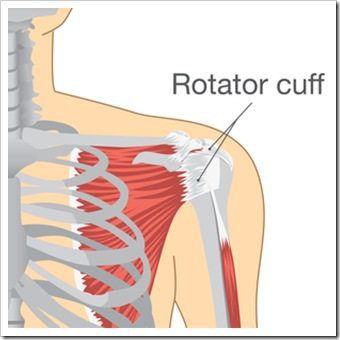
The shoulder joint’s support and stability are made up by an intricate group of muscles that surround the cap of the shoulder called the cuff.
The rotator cuff itself consists of four muscle groups which lie all around the shoulder blade – in front, either side and on top. These muscle groups fibers then all lead up to the arm bone where they become join the tendons and attach onto the top part of the arm. Their function is to stabilize the shoulder joint while allowing the shoulder to move and turn through a wide range of motions enabling us to perform an incredible variety of functions with our arms.
This structural feat is amazing, but due to this flexibility and mobility, rotator cuff injuries are very common. A small injury can happen in one of the tendons or muscles and can very quickly progress to irritating other adjacent areas due to compensation patterns.
Understanding Rotator Cuff Injuries
Rotator cuff injury is a broad term used to describe any damage to the rotator cuff. Common injuries to the shoulder and rotator cuff include partial tears in the muscles and tendons, which can result from acute injury or repetitive wear and tear over the long term.
Common Symptoms of a Rotator Cuff Injury
The inability to lift the arm at the shoulder out to the side
Pain on putting a coat on or pain when sleeping on that side at night. Radiating pain down the arm towards the elbow or even radiating down into their hands.
The Two Main Causes
In the case of rotator cuff injuries, they are commonly separated into two defining causes which are ‘repetitive micro-trauma’ and ‘traumatic injuries‘.
Repetitive Micro-trauma Injuries: In repetitive use injuries to the rotator cuff, repeated activities cause damage to the rotator cuff tendons. Over time, the tendons wear faster than the body can repair them allowing a micro-tear to develop within the tendons. Most often patients suffering from repetitive strain have complaints of shoulder pain before developing tears in the rotator cuff tendons.
Traumatic Injuries: Traumatic injuries to the rotator cuff are seen after events such as throwing, golf and falling onto an outstretched arm. The traumatic event can cause the tear in the rotator cuff tendons. This type of injury is much less common than repetitive use injuries.
Although partial tear injuries are more commonly suffered, full tears to the tendon are frequently found in older sufferers. A complete tear injury is found more often because as we age, the muscle and tendon tissue of the rotator cuff loses some elasticity. With the loss of elasticity, the blood flow to the mid part of the tendon becomes inadequate. Therefore, healing is slower and degenerative changes are often found.
You Deserve The Best Treatment
The most beneficial treatment process delivers the best results when a Chiropractic physician also provides detailed physical rehabilitative programs targeted to preserve and build muscle strength during the healing process.
Developing a treatment plan individualized to the particular cause of the injury is crucial.
The musculoskeletal specialist, such as a chiropractor and one who specializes or works with specialists in physical rehabilitation will result in the highest quality of care for this injury as the full recommendation will lead to in quickest and fastest healing results.
Physical rehabilitation and rest are the recommended course of action for effective reduction of pain and restoration of full function to the arms and shoulders. As with many other repetitive movement injuries, massage therapy in conjunction with chiropractic care can provide not only pain relief but the highest restoration of range of movement.
Soft tissue treatments such as ART and Graston work to reduce the frequency and symptoms of inflammation, sending fibrous adhesions that inhibit functional movement back into circulation.
Kinesiotape can be beneficial as well by helping correct and maintain proper shoulder positioning throughout the day by stimulating proprioception, increasing your body’s positional awareness.
Ready To Get Back Into The Swing?
Shoulder injuries do not need to be athletically related and can happen at any age.
If you are currently sidelined from the activities you love due to injury, please contact us today so we may help you get back into the game of life!
Our team is experts in the correction and rehabilitation of musculoskeletal injuries including rotator cuff injuries.
by Dr. Brandon Chorney | Nov 8, 2016 | Health Articles
Ice or Heat? When you suffer from an injury or are in need of pain relief, this question arises quite frequently. Most often apply the solution that our mothers gave us or what our best friend who also suffered from the same the injury or pain did. While some say ice is better for your...
Read More >>
by Dr. Brandon Chorney | Mar 22, 2016 | Health Articles
Our bodies love the exhilaration of moving fast. Unfortunately, they are not as accepting of the sharp stops. These sharp stops can not only be painful today but can have a traumatic effect on your health long term.
If you have ever been in a car, roller coaster, or possibly simply fallen and came to a sudden stop, you may have experienced an injury that may have produced neck pain, back pain, or headaches.
The injury suffered is most often described as Whiplash.
What Is A Whiplash Injury?
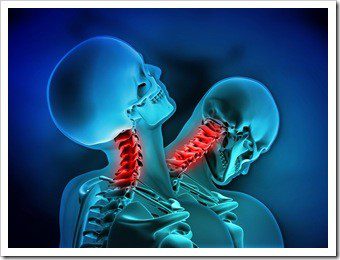
A whiplash injury refers to a group of injuries that occur as a result of the sudden, violent whipping motion of the head in an accident. The whip can happen in any direction – back-forward, forward-back, side-side, or anything in between. Various injuries can result, including damage to the supporting muscles, ligaments and other connective tissues in the neck and upper back. A host of related symptoms can then kick off from these, many of which, to the untrained eye, can appear completely unconnected to the original trauma.
Whiplash injuries most often result in a sprain-strain of the neck. This sprain occurs when the muscles and ligaments that help support, protect, and restrict excessive movement of the vertebrae are strained or stretched beyond their normal limits. The joints in the back of the spine, called the facet joints, are covered by ligaments called facet capsules, seem to be particularly susceptible to whiplash injury. The nerve roots between the vertebrae may also be stretched and become inflamed. Spinal discs between the vertebrae, which are essentially ligaments, can also be torn, potentially causing a disc herniation or worse fractured or dislocated.
While whiplash may be the most common injury, it may not present itself immediately. These complex injuries can manifest in a wide variety of ways, including neck pain, headaches, fatigue, upper back and shoulder pain, cognitive changes, and low back pain.
Symptoms Of A Whiplash Injury
People who experience whiplash may develop one or more of the following symptoms, usually within the first few days after the injury:
- Neck pain and stiffness
- Headaches
- Pain in the shoulder or between the shoulder blades
- Low back pain
- Pain or numbness in the arm and/or hand
- Dizziness
- Difficulty concentrating or remembering
- Irritability, sleep disturbances, fatigue
It should be remembered that the effects of whiplash may take weeks or months to fully manifest, thus it cannot be assumed that no problems exist just because no symptoms are felt immediately following the accident. These symptoms should always be taken seriously no matter how insignificant they may, at first, appear due to the areas which are affected.
If you are not very careful, a whiplash injury may end up causing permanent damage when it is not noticed or its effect is underestimated. Around 50% of whiplash victims are still suffering the effects of their whiplash years later.
What the Research Says…
Nearly 1 out of 15 adult Americans suffers from the annoying and sometimes debilitating long-term effects of a whiplash injury, usually in the form of neck stiffness and pain. Fortunately, chiropractic offers a very high level of help regarding relief for whiplash. Here are the conclusions of 3 separate studies:
- In a study published in Injury, 93 percent of 28 patients showed significant improvements following chiropractic care. The protocol utilized included spinal manipulation, stretching, and ice therapy.
- Study results published in the Journal of Orthopedic Medicine showed similar findings. “Whiplash injuries are common. Chiropractic is the only proven effective treatment in chronic cases,” researchers said in their study conclusions.
- Finally, two separate studies published in the Journal of Manipulative Physiology and Therapy confirm chiropractic benefits. “For chronic spinal pain in general, when compared to traditional medical approaches, chiropractic has generally been shown to be more effective.”
Using Your Head
Whiplash is a common injury that can occur in our current lifestyles. Practicing safe driving and using properly adjusted headrest restraints and seatbelts can go a long way to preventing whiplash accidents. Also, wearing the proper headgear in sporting activities, particularly for those playing a sport like football or lacrosse, can also help to prevent injuries. But when painful blows to the cervical spine occur be smart and have a professional evaluation by a chiropractor who is a spinal specialist and specialize in sports physiology and rehabilitation.
Green Light To Recovery
Although prevention would be the best solution, if you are in an accident remember seeing a chiropractor immediately after a collision can speed your road to recovery. Chiropractic care utilizes manual manipulation of the spine to restore the normal movement and position of the spinal vertebrae. Manipulation involves the Chiropractor gently moving the involved joint into the direction in which it is restricted. It is by far the single-most effective treatment for minimizing the long-term impact of whiplash injuries, and may be coupled with massage therapy, trigger point therapy, exercise rehabilitation and other soft tissue rehabilitation modalities.
So, if you or a loved one have been in an accident or are suffering from a related injury, make an appointment as soon as you can. Remember that letting the chiropractor and his expert team know the specific details of the accident will aid in the speed of your recovery.
by Dr. Brandon Chorney | Jun 18, 2015 | Health Articles
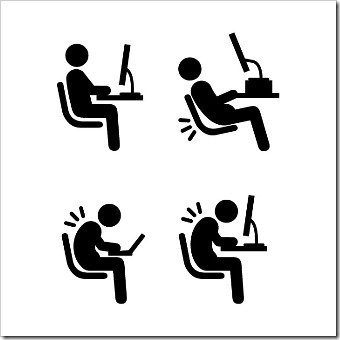
Gone are the days of sitting back in our office chairs with our feet on the desk. Now we have gone to the absolute other extreme to where our heads are almost in the computer screen as they are stretched and extended by our form that is becoming hunched and almost disfigured. With this wonderful posture we have gained illnesses and pains that could and can be avoided. To help find and create solutions to this growing trend and to help companies have healthier employees and in turn more productivity with less sick days, the science of workplace ergonomics was developed to address work place solutions which creates a win for both employee and employer.
Simple Ergonomics
Ergonomics is the practice of suiting the conditions in which a person works to the specific capabilities and job demands of that employee. It follows that, for an ergonomic workplace to be created, a proper assessment of the environment must first of all take place so that appropriate changes can be made on the basis of accepted ergonomic principles. The aim is to create a safer and more productive working environment for the employee.
The Three Most Important Applications of Workplace Ergonomics:
- The stress of any lifting should be taken by the largest muscles to protect the smaller and more vulnerable ones.
- When working, the employee should be able to move comfortably between various correct postures so they don’t over-stress one particular part of the body for an extended period. Muscles become fatigued when kept tense for too long, especially if that one posture is poor.
- Joints should move through no more than 50% of their range when performing activities, and preferably be kept in a neutral position. Joints that are overextended can become damaged and susceptible to repetitive stress/strain injuries.
Tips for Safe Lifting:
When lifting anything off the floor, bend at the knees, not at the waist. Keep your head up, your neck and back straight, and use your leg muscles to power up to standing. Bending forward at the waist to lift brings your low-back muscles into it, and these can be easily pulled. Keep your elbows flexed and hold the object close in to your body to further minimize back strain.
Tips for the Desk Jockey:
- The height of the desk should be suited to your frame, and everything you need should be within easy reach.
- Your feet should be able to touch the floor, and the angle between your torso and thighs should be 90 to 110 degrees.
- Keep your body straight, head and neck upright, and keep your task directly in front of you. Don’t hunch or slouch.
- The top of your computer monitor should be at your eye level. Your head should be in a neutral position, otherwise any leaning forward can cause pain in the neck and head.
- Your wrists should be straight when typing, and your shoulders and forearms parallel to the floor.
- Anything you read at your desk should be at the same level as though you were reading it on your monitor. Use a book stand or a paper holder.
- Use a headset when talking on the telephone – certainly if you are doing so for long periods. Never use your shoulder to cradle the phone against your ear. This will lead to headaches and neck pain.
- Every 20 or 30 minutes, get up, have a stretch and go for a little wander. But do not stray to long.
- Frequently stretch out your neck, arms, wrists, back, and legs while working. Try neck rotations, fist clenches, arm dangles, and shoulder shrugs.
- Don’t stare at one thing for too long. If your eyes do not frequently shift focus, they will become strained. Take a few seconds to look from objects that are nearby to objects that are farther away, such as your colleagues who are still frowning at you following your last stretching routine.
Bonus Mouse Safety:
Use you arm and shoulder to move the mouse, not just your wrist. Hold the mouse loosely and keep your wrist straight and relaxed. The edge of your desk is not the best place to rest your wrist; instead, use a gel rest incorporated into the mouse mat. Take regular breaks during each hour to flex your wrists, and to move your arms and shoulders.
We Can Help!
With the exponential growth of the internet world our bodies can endure poor repetitive posture and strains for over eight hours a day and sometime more. These demands have developed many of these health challenges such as neck pain, headaches, low back pain, carpal tunnel.
As specialists our team has been developed to first address your pain symptoms but also work to create better solutions for you and your company’s team. We encourage questions and would love to help your team by helping you develop solutions to your work environment, which should be a happy healthy place for you; for you may be there more than your own home.
by Dr. Brandon Chorney | Feb 26, 2015 | Health Articles
As we look in the mirror or stand on a scale, we are measuring our health on a simple measurement of visual information. All the graphs and medical journals outline our health on simple measurements and determine where we should optimally range to be considered healthy. When it comes to our health internally we no...
Read More >>

 Are you sitting on the sideline for some of your favorite activities due to a shoulder injury that is making many routine activities challenging and painful? Or have you played through telling yourself it will heal or you will address later?
 Gone are the days of sitting back in our office chairs with our feet on the desk. Now we have gone to the absolute other extreme to where our heads are almost in the computer screen as they are stretched and extended by our form that is becoming hunched and almost disfigured. With this wonderful posture we have gained illnesses and pains that could and can be avoided. To help find and create solutions to this growing trend and to help companies have healthier employees and in turn more productivity with less sick days, the science of workplace ergonomics was developed to address work place solutions which creates a win for both employee and employer.