Posts Tagged ‘New Fairfield Fitness’
Welcome to Chiropractic Life and Wellness Center's New Fairfield Fitness Archive. Here you can learn more about Chiropractic Life and Wellness Center, Chiropractic, and Dr. Brandon Chorney, today's choice for Chiropractors in New Fairfield, CT. Read Dr. Brandon Chorney's Chiropractic New Fairfield Fitness for the health of it.
We look forward to serving you! Call - 203-746-6543.
by Dr. Brandon Chorney | Jul 2, 2013 | Health Articles

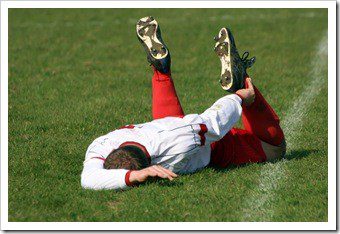
Our country for generations has a great passion for sports. With each generation, kids are discovering new and greater heights in the sports they are choosing to love to play. It is so easy to indulge their passion that, in the fun of it all, the importance of proper conditioning and healthy nutrition may be overlooked by parents and kids alike. Unfortunately, without proper preparedness performance will not be as keen as it might be, and the chances of injury will be much higher.
In those more competitive sports such as football, athletics, and gymnastics, the training regimes imposed upon the kids can be something they are just not ready to handle unless their bodies are fully prepared.
Getting Prepared
Warming up, stretching, strength-training, cooling down, are all necessary for kids involved in sports, but even when they choose to follow the routines, they may not have sufficient learning to follow them properly. Thus it is not necessarily the sport itself that can be injurious; it may be the preparations that cause the damage. Improper stretching or weight-lifting techniques can be fairly ruinous to a still-developing teenager.
There needs to be appropriate and professional instruction given to young athletes in both general warm-up procedures, and in sport-specific warm-up. A slow jog is not sufficient preparation for a sport which may test body parts to their limits.
Eating proper nutrition and keeping well-hydrated are also crucial to support the rigors asked of the young athlete’s body. If 8 to 10 eight-ounce glasses of water each day is recommended for a non-sporting person, the requirements for an athlete are obviously greater considering how they are taxing their systems and sweating it out. A nutritious breakfast is very important, and during match or competition days the athlete should aim to eat a healthy meal around 2 to 4 hours before their physical exertion, and within 1 to 2 hours afterwards to properly refuel the body.
It is one of the traits of youth that kids feel nothing can hurt them, but this obviously isn’t true. By following the tips below, you can ensure your child is well-prepared for whatever their chosen sport throws at them.
Proper Equipment
- This is obviously vital in certain contact sports, such as football and hockey, which can be dangerous.
- Make sure equipment fits well.
- Alert the trainer if equipment is damaged.
Healthy Eating
- Young athletes should eat a well-balanced diet and avoid skipping meals.
- Candy bars, fast food and the like should be shunned.
- Provide healthy foods at home, such as fruit and veg rather than cookies and potato chips.
- Dietary rules are imposed on participants of certain sports, without which optimum performance is unlikely.
- Be watchful of your child becoming too fanatical about this and ending up losing too much weight.
Proper Hydration
- Hydration is vital to optimal fitness.
- Teenage athletes need at least 8 eight-ounce glasses of water a day.
- Younger athletes need 5 to 8 eight-ounce glasses.
- Look at a good quality sports drink for young athletes who need a sustained source of replenishment.
Warm-Up
- Before every event – competition or practice – the athlete should warm up. Talk to the coach if this is not happening.
- Jogging, jumping rope, lifting light weights are all good ways to avoid torn or ripped muscles.
Extra Boost
- Multi-vitamins may help a young athlete avoid a deficiency.
- B-complex vitamins and amino acids can help reduce pain after contact sports.
- Thiamine helps promote healing.
- Vitamin A is good for scar tissue.
Sleep Tight
- Young athletes should get eight hours of sleep a night to avoid adversely affecting performance.
- Fatigue can appear as irritability and a loss of interest in the sport.
Chiropractic Care Can Help
Doctors of chiropractic are trained to provide treatment for the whole neuromusculoskeletal system, and are able to offer advice on appropriate training, nutrition and injury prevention.
by Dr. Brandon Chorney | May 16, 2013 | Health Articles
Today most people know that they “should” be doing regular exercise. However, for the vast majority it has been so many years, if ever, since they did regular exercise that they don’t even know where to begin. This tends to result in an inevitable merry-go-round of various training programs and routines. You probably know exactly what I mean. You join a gym or buy some home gym equipment, then go out and buy some workout clothes so that you will look good during you workout. Now that you’ve spent your hard earned money you are expecting to see some results. You’ve committed to do this new program and a few weeks later you realize that you haven’t worked out in a couple weeks, so you get re-committed and the whole process repeats. Ultimately you never had sufficient follow through to see measurable results. The simple fact that you didn’t get to the measurable result tends to lead to to a variety of undesirable effects: giving up, stress, binge eating, and general self loathing (I hate myself!!).
The fact is that you did get a measurable result – you were just measuring the wrong things: New Membership, New Clothes and New Equipment. Of course, that wasn’t what you had intended but in today’s culture we have a tendency to throw money at things in an effort to buy a solution. Unfortunately it doesn’t really matter how much money you throw at your fitness – it’s tough to buy regular exercise. That doesn’t mean that you can’t make the experience more pleasant by buying a few comforts but the first thing that should be on your to do list is a commitment to what you want to achieve with your regular exercise, in what time frame you want to achieve this goal, how you benefit by achiving this goal and an action plan. You can get very specific on this point.
What Does Your Goal Look Like?
My Regular Exercise Goal: Walk Continuously for 30 minutes 4 days per week
Time Frame to Achieve My Goal: 6 weeks (this is a good time frame to start with)
Benefits from Achieving My Goal: Increase Cardiovascular Fitness, Improved Sleep, Lower Stress and More Life
Action Plan: Walk Continuously for 5 minutes 4 days per week and increase by 5 minutes each week.
Learning to Leverage Yourself
Now it’s time to leverage yourself to ensure that you actually achieve your goal. Decide on a reward that you will give yourself for achieving it. Don’t go over the top on your first goal but it should definitely be something that you really want.
Reward for Achieving My Goal: 2 hour Full Body Spa Treatment
Don’t wait until you achieve your goal to buy the reward – go out and buy it now! This is the best way to spend money on achieving better fitness; on a reward for doing it.
Now the last and most important step to really leverage yourself. Call someone that knows you have been struggling with your exercise and let them know what your goal is and that you have already bought your reward. Tell them that you are so committed to achieving this goal that if you don’t do it that you will be giving them your “reward”! This works even better if you would hate to give this person your reward.
We All Love to be the Winner
As small children we were well conditioned to work hard toward a goal when there was a perceived reward for achieving the goal. We also understood that if we didn’t win that someone else would get the reward for winning. For the vast majority of us that desire to achieve the goal and to get the reward is still present. Learning how to access this built in desire to achieve the goal and reward as part of your regular exercise program can help to get you off of the merry-go-round. The trouble with regular exercise is that we very often can’t perceive the goal or reward and as a result we have a hard time understanding why we are continuing to do this regular exercise. By building in your own goals and reward system I can promise that your commitment to achieve your goals will be much more sustainable.
Once you achieve your first goal and receive that reward be sure to celebrate it because you are in the “Winner’s Circle”! Then turn around and set your next goal. Initially you will want to keep your goals simple to achieve so that you can be the winner again and again. Keep your time frames beteen 4 and 6 weeks so that you can maintain your intensity for achieving the goal. Make each successive goal a bit more difficult but still attainable and one goal at at time you will see your level of fitness continuing to improve.
Is Walking Really Beneficial to My Health?
Remember that general exercise is a key factor in maintaining overall health and well being. If you’re committed to the long-term health and well-being for yourself and your family, regular exercise is essential. Starting with walking as your form of regular exercise is one of the best possible choices. Walking avoids the vast majority of pitfalls associated with other types of exercise. Walking is low-impact, requires minimal equipment, and no gym memberships. Walking can be done outside in the fresh air and sunshine which provides many additional benefits beyond those gained from the exercise itself.
Starting slowly is the main consideration. If you haven’t done any vigorous physical activity for months or years, 5-10 minutes of walking at a modest pace should be sufficient for your first day of walking. 3-5 minutes out and 3-5 minutes back. Make 10 minutes your limit even if that amount feels like it is too little. It’s always better to start with less exercise and gradually increase over time than to start with too much and suffer from muscular soreness or injury. Adding approximately a minute eacj day, until you’re doing a thirty minute walk at a modest pace. With this quantity of comfortable walking, you can now begin to increase your pace. Ultimately, 30 minutes of walking at a brisk pace will provide sufficient health benefits for most people, based on 4 to 5 walking sessions per week.
Consistent regular exercise can help to lower blood pressure, prevent heart disease, reduce the incidence of stroke, reduce the incidence of diabetes and obesity, and it can even improve the outcomes of patients receiving cancer treatment. Walking for exercise is an efficient, enjoyable, and easy way to enable you and your family to begin obtaining these long term health benefits.
by Dr. Brandon Chorney | Apr 19, 2012 | Health Articles
Kids love to play sports today just as they always have done, but these days the variety of sports on offer is huge. It is so easy to indulge their passion that, in the fun of it all, the importance of proper conditioning and healthy nutrition may be overlooked by parents and kids alike. Without...
Read More >>