Posts Tagged ‘New Fairfield CT Spinal Stenosis’
Welcome to Chiropractic Life and Wellness Center's New Fairfield CT Spinal Stenosis Archive. Here you can learn more about Chiropractic Life and Wellness Center, Chiropractic, and Dr. Brandon Chorney, today's choice for Chiropractors in New Fairfield, CT. Read Dr. Brandon Chorney's Chiropractic New Fairfield CT Spinal Stenosis for the health of it.
We look forward to serving you! Call - 203-746-6543.
by Dr. Brandon Chorney | Aug 3, 2017 | Health Articles

Next time you are out, look to the person on your left and right or better yet look at the group of people who are just a short distance from you. What you may notice is the rolled shoulders and head forward posture. No, it is not the cell phone they have in their hands...
Read More >>
by Dr. Brandon Chorney | Aug 9, 2016 | Health Articles
The American lifestyle over the last few decades has given rise to today's leading cause of infirmity. Unfortunately, lower back pain is so common that it affects almost 90% of adults. The majority also suffer from lumbar arthritis as a contributing factor to their lower back pain. Spinal arthritis is a degenerative process that develops...
Read More >>
by Dr. Brandon Chorney | Jun 21, 2016 | Health Articles
Oh, we love to search online. So much so, it is not uncommon for someone to say, "I will Google it.". With today's hectic lifestyles our stress and pain overload is up and our time and patience are down. For solutions, many of us head to the extension of our hand - our smartphone or...
Read More >>
by Dr. Brandon Chorney | Apr 22, 2014 | Health Articles
Our lifestyles over the last thirty years have given way to a leading cause of debilitation. Unfortunately low back pain has become so extremely common that it is affecting sixty to ninety percent of the adult population. The vast majority also suffer from some degree of lumbar arthritis as a primary or contributing factor to their back pain. Lumbar spine arthritis is a degenerative condition that develops over time in response to the normal demands that are placed on the lumbar vertebrae. It can be symptomatic to varying degrees from mild to severe and is often contributing factor to disability.
Know Your Spine
The spine is composed of twenty four moving segments known as vertebrae. The vertebrae are further classified with seven cervical or neck, twelve thoracic or mid-back, and five lumbar or lower back vertebrae. The spinal vertebrae are separated by inter vertebral discs, which are composed of an outer ligamentous layer called the annulus fibrosis and a central gelatinous layer called the nucleus pulposis. The collagen fibers of the annulus fibrosis anchor the disc to the vertebrae. This allows for movement between vertebrae and dispersion of weight bearing forces from one vertebra to the others below it in the spine.
The inter vertebral discs often times lose their elasticity and hydration with age or as the result of injury. This loss of elasticity decreases the ability of a disc to handle the weight that it must bear. The discs become shorter which changes the position of the vertebrae and their associated connecting fibers in relation to the rest of the spine. Over time, a situation develops whereby bone lays directly on bone, causing pain and decreased ranges of motion.
Ultimately, this pattern of degeneration may result in micro-fractures and additional cartilage damage. Although the body attempts to replace that which is lost, it is often insufficient to overcome the degenerative process. As bone surface erodes, mechanical stress on the joints increase. The body’s response to this stress is the formation of new bony outgrowths called osteophytes. This process is seen often in the facet joints and end plates of the lumbar spine. If combined with compression and bulging of inter vertebral discs and hypertrophy of spinal ligaments the size of the spinal canal might decrease creating a condition known as spinal stenosis. With the development of spinal stenosis, comes the risk that the spinal cord and its exiting nerves being compressed.
Lumbar Spine Arthritis Symptoms
Classic symptoms of any form of arthritis include joint pain, swelling, and stiffness. Patients with lumbar arthritis often have low back or pelvic pain. They tend to have difficulty with mobility secondary to postural changes and decreased flexibility. As with most forms of osteoarthritis, pain and stiffness is most pronounced in the morning. As movement increases over the course of the day, symptoms tend to subside. In general, if there is no evidence of nerve root compromise, pain from an arthritic spine is localized to the low back with possible dull aching referred pain in the buttocks. Patients with degenerative changes resulting in spinal stenosis may experience numbness, tingling, or weakness in the legs due to irritation of the lumbar nerve roots.
How is Lumbar Spine Arthritis Diagnosed?
A chiropractic physician is able to make the diagnosis of lumbar arthritis when the constellation of symptoms and physical exam are consistent with degenerative changes in the spine. A description of back pain for a long period of time that increases with mechanical stress may alert your doctor to the presence of lumbar arthritis. Therefore, it is important to provide your physician with detailed information about your back pain including timing, severity, and exacerbating or alleviating factors. The physical exam will focus on the range of motion within your spine, muscle strength, and reflexes within your legs. Patients with lumbar arthritis will notice pain when bending backwards because this places maximal pressure on the osteoarthritic facet joints. Likewise, patients may find that the pain decreases when bending forward because this relieves joint pressure.
An X-ray will likely be ordered to look at the bones that make up the lumbar spine. Specifically, your chiropractic physician will look for new bone growth (osteophyte formation) and narrowing of the inter vertebral disk space. A CT (computed topography) scan, a study more detailed than an X-ray, may be ordered to visualize more specific areas of your spine. MRI (magnetic resonance imaging) scans utilize magnetic rays to visualize soft tissue. An MRI may be helpful because it allows your chiropractic physician to better visualize the facet joints and surrounding soft tissues.
What Options of Treatment Are Available for Lumbar Arthritis?
Lumbar arthritis is usually responsive to conservative management. During an acute attack of low back pain, relative rest that avoids activities that aggravates the symptoms may reduce inflammation. For long term relief, lifestyle modification must be undertaken. Weight loss when appropriate will have a tremendous impact on back pain because it is the lumbar spine that bears the weight of the body. Exercise is also critical and can help reduce weight and increase muscle strength to support the lower back. You should consult your doctor before beginning any exercise or diet program. Your doctor may prescribe spinal decompression in combination with rehabilitative therapy. Working with a physical therapist or rehabilitative team to design a proper exercise regimen will be useful for strengthening core muscles and minimizing back pain.
If non-invasive therapies are not effective interventional procedures may be necessary.
Our team understands that long term back pain is not only physically debilitating but emotionally exhausting. To serve our community we have built a diverse team committed to work together harmoniously to help you or your loved one recapture the quality of life they desire – pain free!

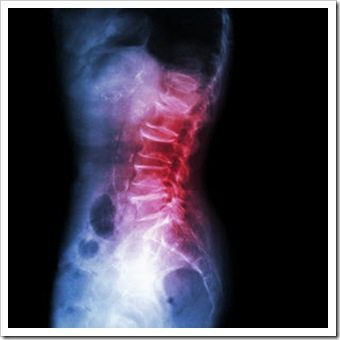

 Our lifestyles over the last thirty years have given way to a leading cause of debilitation. Unfortunately low back pain has become so extremely common that it is affecting sixty to ninety percent of the adult population. The vast majority also suffer from some degree of lumbar arthritis as a primary or contributing factor to their back pain. Lumbar spine arthritis is a degenerative condition that develops over time in response to the normal demands that are placed on the lumbar vertebrae. It can be symptomatic to varying degrees from mild to severe and is often contributing factor to disability.