Posts Tagged ‘New Fairfield CT neck pain’
Welcome to Chiropractic Life and Wellness Center's New Fairfield CT neck pain Archive. Here you can learn more about Chiropractic Life and Wellness Center, Chiropractic, and Dr. Brandon Chorney, today's choice for Chiropractors in New Fairfield, CT. Read Dr. Brandon Chorney's Chiropractic New Fairfield CT neck pain for the health of it.
We look forward to serving you! Call - 203-746-6543.
by Dr. Brandon Chorney | Nov 20, 2014 | Health Articles

As the roads become increasingly slippery, more auto accidents are occurring at an alarming rate. The sharp or sudden stops are causing whiplash injuries to not only the driver but all the passengers involved. These injuries unfortunately do not always cause sudden pain but can manifest over time and are not limited to motor vehicles...
Read More >>
by Dr. Brandon Chorney | Nov 6, 2014 | Health Articles
The smell of the ice. Some find no bigger pleasure as the sweet cold smell reaches our nose and begins the adrenaline rush for the upcoming hockey season. If you are one of the many fans you are aware that hockey can be an action packed game that comes with several health risks due...
Read More >>
by Dr. Brandon Chorney | Apr 17, 2014 | Health Articles
Our body has a miraculous way of healing it self but also protecting damaged areas. Scar tissue is one of the body's natural reactions to injury, no matter how small or slight. Everyday actions that most people would not regard as an injury can create scar tissue. The soft tissues in our body are made...
Read More >>
by Dr. Brandon Chorney | Mar 27, 2014 | Health Articles
Future Olympic champions are following the steps of some of the greatest athletes on the planet. Their training regiment now includes proper spinal alignments for optimal performance and to avoid or recover from injuries. In today’s age of health and fitness, more and more kids are involved in sporting activities. Although being part of a...
Read More >>
by Dr. Brandon Chorney | Mar 13, 2014 | Health Articles
For decades, arthritis has been considered a part of aging. But not anymore. Surprisingly recent research points out that people much younger can develop rheumatoid arthritis pain but the best news is that people no longer need to suffer needlessly from the pain. Years ago, doctors hardly ever encouraged Rheumatoid Arthritis patients to “go take a hike” or “go for a swim.” Arthritis was considered an inherent part of the aging process and a signal to a patient that it’s time to slow down. Great news! Recent research and clinical findings show that there is much more to life for arthritis patients than the traditional recommendation of bed rest and drug therapy.
Understanding Rheumatoid Arthritis
The word “arthritis” means “joint inflammation” and is often used in reference to rheumatic diseases. Rheumatic diseases include more than 100 conditions, including gout, fibromyalgia, osteoarthritis, psoriatic arthritis, and many more. Rheumatoid arthritis is also a rheumatic disease, affecting about 1 percent of the U.S. population (about 2.1 million people.)1 Although rheumatoid arthritis often begins in middle age and is more frequent in the older generation, it can also start at a young age.
Rheumatoid arthritis causes pain, swelling, stiffness, and loss of function in the joints. Several features distinguish it from other kinds of arthritis:
- Tender, warm, and swollen joints.
- Fatigue, sometimes fever, and a general sense of not feeling well.
- Pain and stiffness lasts for more than 30 minutes after a long rest.
- The condition is symmetrical. If one hand is affected, the other one is, too.
- The wrist and finger joints closest to the hand are most frequently affected. Neck, shoulder, elbow, hip, knee, ankle, and feet joints can also be affected.
- The disease can last for years and can affect other parts of the body, not only the joints.2
Rheumatoid arthritis is highly individual. Some people suffer from mild arthritis that lasts from a few months to a few years and then goes away. Mild or moderate arthritis have periods of worsening symptoms (flares) and periods of remissions, when the patient feels better. People with severe arthritis feel pain most of the time. The pain lasts for many years and can cause serious joint damage and disability.
May I Exercise?
Exercise is critical in successful arthritis management. It helps maintain healthy and strong muscles, joint mobility, flexibility, endurance, and helps control weight. Rest, on the other hand, helps to decrease active joint inflammation, pain, and fatigue. For best results, arthritis patients need a good balance between the two: more rest during the active phase of arthritis, and more exercise during remission.2 During acute systematic flares or local joint flares, patients should put joints gently through their full range of motion once a day, with periods of rest. To see how much rest is best during flares, patients should talk to their health care providers.3
The following exercises are most frequently recommended for patients with arthritis:*
| Type of Exercise |
Benefits |
Frequency of Exercise |
| Range-of-motion exercises, e.g. stretching and dance |
Help maintain normal joint movement and increase joint flexibility. |
Can be done daily and should be done at least every other day. |
| Strengthening exercises, e.g. weight lifting |
Help improve muscle strength, which is important to support and protect joints affected by arthritis. |
Should be done every other day, unless pain and swelling are severe. |
| Aerobic or endurance exercises, e.g. walking, bicycle riding, and swimming |
Help improve the cardiovascular system and muscle tone and control weight. Swimming is especially valuable because of its minimal risk of stress injuries and low impact on the body. |
Should be done for 20 to 30 minutes three times a week unless pain and swelling are severe. |
Range-of-motion exercises
For example, stretching and dance help maintain normal joint movement and increase joint flexibility. Exercise can be done daily and should be done at least every other day. Strengthening exercises, e.g. weight lifting help improve muscle strength, which is important to support and protect joints affected by arthritis and should be done every other day, unless pain and swelling are severe. Aerobic or endurance exercises, e.g. walking, bicycle riding, and swimming help improve the cardiovascular system and muscle tone and control weight. Swimming is especially valuable because of its minimal risk of stress injuries and low impact on the body. This exercise can be done for 20 to 30 minutes three times a week unless pain and swelling are severe.
Important Note:
If patients experience
- Unusual or persistent fatigue,
- Increased weakness,
- Decreased range of motion,
- Increased joint swelling, or
- Pain that lasts more than one hour after exercising,
they need to talk to their health care provider.3 Doctors of chiropractic will help arthritis patients develop or adjust their exercise programs to achieve maximum health benefits with minimal discomfort and will identify the activities that are off limits for this particular arthritis patient.
Nutrition for the Rheumatoid Arthritis Patient
Arthritis medications help suppress the immune system and slow the progression of the disease. But for those who prefer an alternative approach, nutrition may provide complementary support. Some evidence shows that nutrition can play a role in controlling the inflammation, and possibly also in slowing the progression of rheumatoid arthritis.
Some foods and nutritional supplements can be helpful in managing arthritis:
- Fatty-acid supplements: eicosapentaenoic acid (EPA), docosahexaenoic acid (DHA), and gamma linolenic acid (GLA). Several studies point to the effectiveness of these fatty acid supplements in reducing joint pain and swelling, and lessening reliance on corticosteroids. 4,5
- Deep-sea fish, such as salmon, tuna, herring, and halibut, are sources of EPA and DHA. GLA is found in very few food sources, such as black currants and borage seed.
- Turmeric, a spice that’s used to make curry dishes, may also be helpful. A 95 percent curcuminoid extract has been shown to significantly inhibit the inflammatory cascade and provide relief of joint inflammation and pain.
- Ginger extract has been shown to be beneficial in terms of inflammation.
- Nettle leaf extract may inhibit some inflammatory pathways.
- A vegetarian or low-allergen diet can help with the management of rheumatoid arthritis as well.
The benefits and risks of most of these agents are being researched. Before taking any dietary supplement, especially if you are using medication to control your condition, consult with your health care provider.
What Can Your Doctor of Chiropractic Do?
If you suffer from rheumatoid arthritis, your doctor of chiropractic can help you plan an individualized exercise program that will:
- Help you restore the lost range of motion to your joints.
- Improve your flexibility and endurance.
- Increase your muscle tone and strength.
Doctors of chiropractic can also give you nutrition and supplementation advice that can be helpful in controlling and reducing joint inflammation.
References
- Questions and Answers about Arthritis and Rheumatic Diseases. National Institute of Arthritis and Musculoskeletal and Skin Diseases. February 2002. Available from http://www.niams.nih.gov/hi/topics/arthritis/artrheu.htm.
- Handout on Health: Rheumatoid Arthritis. National Institute of Arthritis and Musculoskeletal and Skin Diseases. Jan. 1998, revised Nov. 1999. Available from http://www.niams.nih.gov/hi/topics/arthritis/rahandout.htm.
- Questions and Answers about Arthritis and Exercise. National Institute of Arthritis and Musculoskeletal and Skin Diseases. May 2001. Available from http://www.niams.nih.gov/hi/topics/arthritis/arthexfs.htm.
- Fortin Paul R., et al. Validation of a meta-analysis: the effects of fish oil in rheumatoid arthritis. J Clin Epidemiol, Vol. 48, 1995, pp. 1379-90.
- Navarro Elisabet, et al. Abnormal fatty acid pattern in rheumatoid arthritis – A rationale for treatment with marine and botanical lipids. J Rheum, Vol. 27, February 2000, pp. 298-303.


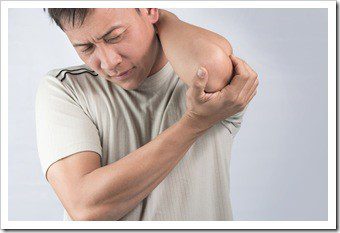

 For decades, arthritis has been considered a part of aging. But not anymore. Surprisingly recent research points out that people much younger can develop rheumatoid arthritis pain but the best news is that people no longer need to suffer needlessly from the pain. Years ago, doctors hardly ever encouraged Rheumatoid Arthritis patients to “go take a hike” or “go for a swim.” Arthritis was considered an inherent part of the aging process and a signal to a patient that it’s time to slow down. Great news! Recent research and clinical findings show that there is much more to life for arthritis patients than the traditional recommendation of bed rest and drug therapy.