Posts Tagged ‘New Fairfield CT Back Pain’

Welcome to Chiropractic Life and Wellness Center's New Fairfield CT Back Pain Archive. Here you can learn more about Chiropractic Life and Wellness Center, Chiropractic, and Dr. Brandon Chorney, today's choice for Chiropractors in New Fairfield, CT. Read Dr. Brandon Chorney's Chiropractic New Fairfield CT Back Pain for the health of it.

We look forward to serving you! Call - 203-746-6543.

Pack Your Bags – Leave Your Back Pain Behind!

Back Pain New Fairfield CT Vacation

Summer vacation is near!  The excitement of warm weather and the well-needed break from school or work  is upon us.  As the last school bell rings or the final confirmation of your travel plans arrives to make sure you not only pack accordingly but prepare with these simple tips so you may enjoy the most of...

Read More >>

Avoid Back Pain, Not the Basket

Back Pain New Fairfield CT Leg Pain
Basketball season is upon us!  Whether we play professionally, for a school team, or for fun, it’s time to stop defending the back court and  invest in the proper shoes to avoid future injuries. This way we can make the slam dunk of the season – without any lasting consequences.

The majority of people choose fashion over function when purchasing athletic shoes. This can lead to poor fitting shoes which will not only leave you with painful feet at the end of the day, but pain throughout your body too. Because footwear plays such an important role in the function of bones and joints—especially for runners and other athletes—choosing the right shoe can help prevent pain in your back, hips, knees, and feet.

Unfortunately, there is no such thing as the perfect athletic shoe—every pair of feet is different, every shoe has different features, and overall comfort is a very personal decision. For this reason, it is recommended that you first determine your foot type: normal, flat, or high-arched.

The Normal Foot

Normal feet have a normal-sized arch and will leave a wet footprint that has a flare, but shows the forefoot and heel connected by a broad band. A normal foot lands on the outside of the heel and rolls slightly inward to absorb shock. Best shoes: Stability shoes with a slightly curved shape.

The Flat Foot

This type of foot has a low arch and leaves a print that looks like the whole sole of the foot. It usually indicates an over-pronated foot—one that strikes on the outside of the heel and rolls excessively inward (pronates). Over time, this can cause overuse injuries. Best shoes: Motion-control shoes or high-stability shoes with firm midsoles. These shoes should be fairly resistant to twisting or bending. Stay away from highly cushioned, highly curved shoes, which lack stability features.

The High-Arched Foot

The high-arched foot leaves a print showing a very narrow band—or no band at all—between the forefoot and the heel. A curved, highly arched foot is generally supinated or under-pronated. Because the foot doesn’t pronate enough, usually it’s not an effective shock absorber. Best shoes: Cushioned shoes with plenty of flexibility to encourage foot motion. Stay away from motion-control or stability shoes, which reduce foot mobility. When determining your foot type, consult with a chiropractor and their amazing team. He or she can help determine your specific foot type, assess your gait, and then suggest the best shoe match.

Tips To Help You Win The Game

Consider the following tips before you purchase your next pair of athletic shoes:

  • Match the shoe to the activity. Select a shoe specific for the sport in which you will participate. Running shoes are primarily made to absorb shock as the heel strikes the ground. In contrast, tennis shoes provide more side-to-side stability. Walking shoes allow the foot to roll and push off naturally during walking, and they usually have a fairly rigid arch, a well-cushioned sole, and a stiff heel support for stability.
  • If possible, shop at a specialty store. It’s best to shop at a store that specializes in athletic shoes. Employees at these stores are often trained to recommend a shoe that best matches your foot type (shown above) and stride pattern.
  • Shop late in the day. If possible, shop for shoes at the end of the day or after a workout when your feet are generally at their largest. Wear the type of socks you usually wear during exercise, and if you use orthotic devices for postural support, make sure you wear them when trying on shoes.
  • Have your feet measured every time. It’s important to have the length and width of both feet measured every time you shop for shoes, since foot size often changes with age and most people have 1 foot that is larger than the other. Also, many podiatrists suggest that you measure your foot while standing in a weight bearing position because the foot elongates and flattens when you stand, affecting the measurement and the fit of the shoe.
  • Make sure the shoe fits correctly. Choose shoes for their fit, not by the size you’ve worn in the past. The shoe should fit with an index finger’s width between the end of the shoe and the longest toe. The toe box should have adequate room and not feel tight. The heel of your foot should fit snugly against the back of the shoe without sliding up or down as you walk or run. If possible, keep the shoe on for 10 minutes to make sure it remains comfortable.

When Should I Invest In A New Pair?

Once you have purchased a pair of athletic shoes, don’t run them into the ground. While estimates vary as to when the best time to replace old shoes is, most experts agree that between 300 and 500 miles is optimal. In fact, most shoes should be replaced even before they begin to show signs of moderate wear. Once shoes show wear, especially in the cushioning layer, the midsole, they also begin to lose their shock absorption. Failure to replace worn shoes is one of the leading causes of injuries like shin splints, heel spurs, and plantar fasciitis.

Questions?

Our team wants to help you win on and off the court.  Call us and let us help you slam dunk a victory in better health!

Sweep In the Benefits of No Back Pain

Back Pain Relief New Fairfield CT

The excitement of fall is here!  Our senses come alive again as many of us are beginning to enjoy the beautiful and majestic colors displayed on our trees this autumn season.   As we know, this beauty is brief for the trees soon lose their leaves and decorate our lawns with piles of wonderful and...

Read More >>

What Is Workplace Ergonomics?

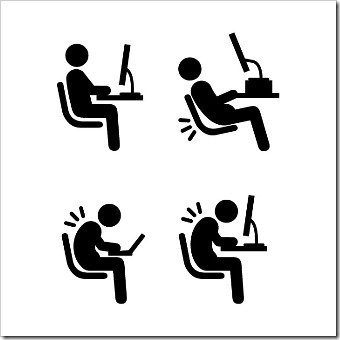
Work Injury New Fairfield CT ErgonomicsGone are the days of sitting back in our office chairs with our feet on the desk.  Now we have gone to the absolute other extreme to where our heads are almost in the computer screen as they are stretched and extended by our form that is becoming hunched and almost disfigured.  With this wonderful posture we have gained illnesses and pains that could and can be avoided.  To help find and create solutions to this growing trend and to help companies have healthier employees and in turn more productivity with less sick days, the science of workplace ergonomics was developed  to address work place solutions which creates a win for both employee and employer.

Simple Ergonomics

Ergonomics is the practice of suiting the conditions in which a person works to the specific capabilities and job demands of that employee. It follows that, for an ergonomic workplace to be created, a proper assessment of the environment must first of all take place so that appropriate changes can be made on the basis of accepted ergonomic principles. The aim is to create a safer and more productive working environment for the employee.

The Three Most Important Applications of  Workplace Ergonomics:

  • The stress of any lifting should be taken by the largest muscles to protect the smaller and more vulnerable ones.
  • When working, the employee should be able to move comfortably between various correct postures so they don’t over-stress one particular part of the body for an extended period. Muscles become fatigued when kept tense for too long, especially if that one posture is poor.
  • Joints should move through no more than 50% of their range when performing activities, and preferably be kept in a neutral position. Joints that are overextended can become damaged and susceptible to repetitive stress/strain injuries.

Tips for Safe Lifting:

When lifting anything off the floor, bend at the knees, not at the waist. Keep your head up, your neck and back straight, and use your leg muscles to power up to standing. Bending forward at the waist to lift brings your low-back muscles into it, and these can be easily pulled. Keep your elbows flexed and hold the object close in to your body to further minimize back strain.

Tips for the Desk Jockey:

  • The height of the desk should be suited to your frame, and everything you need should be within easy reach.
  • Your feet should be able to touch the floor, and the angle between your torso and thighs should be 90 to 110 degrees.
  • Keep your body straight, head and neck upright, and keep your task directly in front of you. Don’t hunch or slouch.
  • The top of your computer monitor should be at your eye level. Your head should be in a neutral position, otherwise any leaning forward can cause pain in the neck and head.
  • Your wrists should be straight when typing, and your shoulders and forearms parallel to the floor.
  • Anything you read at your desk should be at the same level as though you were reading it on your monitor. Use a book stand or a paper holder.
  • Use a headset when talking on the telephone – certainly if you are doing so for long periods. Never use your shoulder to cradle the phone against your ear. This will lead to headaches and neck pain.
  • Every 20 or 30 minutes, get up, have a stretch and go for a little wander. But do not stray to long.
  • Frequently stretch out your neck, arms, wrists, back, and legs while working. Try neck rotations, fist clenches, arm dangles, and shoulder shrugs.
  • Don’t stare at one thing for too long. If your eyes do not frequently shift focus, they will become strained. Take a few seconds to look from objects that are nearby to objects that are farther away, such as your colleagues who are still frowning at you following your last stretching routine.

Bonus Mouse Safety:

Use you arm and shoulder to move the mouse, not just your wrist. Hold the mouse loosely and keep your wrist straight and relaxed. The edge of your desk is not the best place to rest your wrist; instead, use a gel rest incorporated into the mouse mat. Take regular breaks during each hour to flex your wrists, and to move your arms and shoulders.

We Can Help!

With the exponential growth of the internet world our bodies can endure poor repetitive posture and strains for over eight hours a day and sometime more.  These demands have developed many of these health challenges such as neck pain, headaches, low back pain, carpal tunnel.

As specialists our team has been developed to first address your pain symptoms but also work to create better solutions for you and your company’s team.  We encourage questions and would love to help your team by helping you develop solutions to your work environment, which should be a happy healthy place for you; for you may be there more than your own home.

The Responsibility of Evolution – Chiropractic Insights

Evolutions Role New Fairfield CT Back Pain

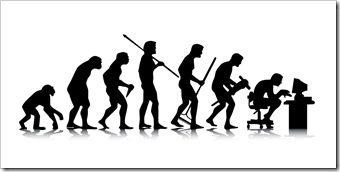
Man's trajectory from the beginning has been to come, become, adapt, and grow.  Our evolution from even a small infant can be measured by lying to sitting, sitting to crawling, and finally crawling to standing.  With this said our species from an outside observer would now be entered as the era of de-evolution of man....

Read More >>

Chiropractic Life and Wellness Center Skip to content