Posts Tagged ‘Low Back Pain New Fairfield CT’
Welcome to Chiropractic Life and Wellness Center's Low Back Pain New Fairfield CT Archive. Here you can learn more about Chiropractic Life and Wellness Center, Chiropractic, and Dr. Brandon Chorney, today's choice for Chiropractors in New Fairfield, CT. Read Dr. Brandon Chorney's Chiropractic Low Back Pain New Fairfield CT for the health of it.
We look forward to serving you! Call - 203-746-6543.
by Dr. Brandon Chorney | May 2, 2017 | Health Articles

Summer vacation is near! The excitement of warm weather and the well needed break from school or work is upon us. As the last school bell rings or the final confirmation of your travel plans arrives make sure you not only pack accordingly but prepare with these simple tips so you may enjoy the most of your holiday.
Subluxation Complication
Traveling in any mode of transport can be physically demanding. Even if the final destination is a luxury holiday, getting there can leave you tired, stressed and in pain.
Sitting down for too long can cause significant problems for the body. No matter how comfortable the seat or surroundings, pressures build and blood flow is restricted. This blood flow restriction is why some people experience DVTs on long-haul flights; because pressure builds up in the blood vessels of the lower legs as the blood becomes more sluggish. Contracting and relaxing the muscles can help to counter this and help the blood flow better.
The Warm Up
Travel should be looked on as a form of strenuous exercise that requires a period of warming up and cooling down. Warm up and stretch before you travel, and cool down with a brisk walk when you arrive to reinvigorate your hamstring and calf muscles.
The Great American Road Trip
- If you are driving, adjust the seat so you’re as close to the wheel as you can be while still feeling comfortable. Keep the knees just a little bit above the hips.
- Use a back support if the seat does not provide adequate support by design. This will help reduce the risk of lower back pain and injury. The support should be widest between the lowest ribs and the waist.
- Exercise your legs while driving to keep the blood flowing and limit any swelling or pain. Count to 10 while spreading your toes wide; count to 5 while tightening your calf muscles, followed by your thigh muscles, then your glutes (butt); roll your shoulders back and forward (keeping your hands on the wheel!).
- Alternate holding the wheel with your hands at the 2 and 7 o’clock positions, and then the 10 and 5 o’clock positions.
- Try not to grip the wheel too tightly, which reduces the circulation and increase fatigue in the muscles of the hands, wrists and arms.
- Vary your focal point to reduce eye strain and headaches, but keep your eyes on the road.
- Take frequent breaks from driving; remember that fatigue behind the wheel can kill.
Sky Miles
- Airline seats are incredibly spine-unfriendly. Standing up straight, familiarize yourself with the normal curve of your spine, then use rolled-up towels to recreate that curve when sitting down. Use another between your neck and the headrest.
- Bags heavier than 5-10% of your body weight should ideally be checked in rather than carried on. Lifting heavy bags into overhead lockers can hurt the spine. Whatever the weight of the bag, make sure you stand directly in front of the compartment and do not twist your back or neck when lifting.
- Under seat luggage should not be forced into place using feet or hands while standing, which can cause muscle spasms given the confined and awkward space between the seats. Instead, sit down first, then push it in using both your hands and feet.
- Move about in your seat frequently to keep the blood flowing and guard against cramps. Massage your thighs and calves, then push up with your toes to shift your knees up and down. Use a bag to raise your feet higher.
- Don’t blast yourself with the overhead air vents which can cause your neck and shoulders to tense.
Buckle Up For Kid Safety:
- Use an approved car seat appropriate to the age of the child when traveling in a car.
- Infant car seats should always face rearwards so that any impact is spread around the back and shoulders and not taken directly by the neck.
- A car seat should not be used in the front seat of a car where an airbag could deploy into it. Similarly, if the rear doors or the rear of the front seats are equipped with airbags, position the child seat in the center of the back seat to avoid it being hit by any of them.
- Secure the car seat as per instructions and make sure it is properly fixed in place and cannot shift. The seat should be at a 45-degree angle to properly support the child’s head.
- Traveling by air? If so, check to see if your car seat can be utilized. It is safer than sitting a child on your lap.
A Great Preflight Health Check For Ultimate Success
For the ultimate success plan ahead and schedule a spinal examination and address underlying issues that could be aggravated by the journey of your holiday. Our fantastic team is just a simple call away and ready to have you jump into your well-earned break!
by Dr. Brandon Chorney | Feb 14, 2017 | Health Articles
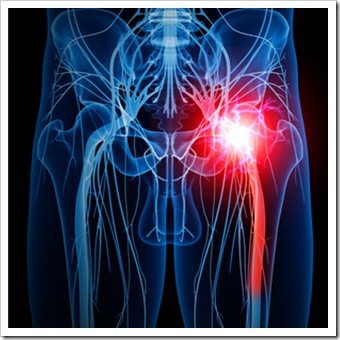
Does every step you take cause you pain that radiates down your leg or legs? Have you become depressed with the pain or been through a series of pain injections to block this pain? If so, read on. Understanding A Cause - The Sciatic Nerve Your sciatic nerve is the longest and widest nerve in...
Read More >>
by Dr. Brandon Chorney | Nov 8, 2016 | Health Articles
Ice or Heat? When you suffer from an injury or are in need of pain relief, this question arises quite frequently. Most often apply the solution that our mothers gave us or what our best friend who also suffered from the same the injury or pain did. While some say ice is better for your...
Read More >>
by Dr. Brandon Chorney | Sep 27, 2016 | Health Articles
Red carpet events and runway fashion shows are the designers dream come to life. For the fashion savvy, we watch in awe and try to duplicate the styles into our lives. One accessory, without fail, that arrives each season is the undeniably loved high heel.
We love to wear them, and even convince ourselves that they are comfortable. But we forget that our feet are not the only area of our body that we are compromising for the sake of fashion.
The Cost of Fashion
The truth of the fashion industry is that it caters to a world that does not exist. Who would willingly walk out onto the street wearing a hat in the shape of a peacock and eight-inch heels, besides the lovely ladies in Sex in the City? Even many of those toned-down items that make it into the high street stores are not suitable for everyday wear. All it takes to cause an injury, and potentially long-term problems are to venture out on the town too many times in high heels with a heavy bag slung over one shoulder. The legs, the back, the shoulders, the spine, and the neck, can all suffer in your pursuit of fashion.
The Pretty Pumps
High heels are the worst culprits in the line-up because they so badly alter a person’s natural balance, throwing all sorts of stresses and strains in vulnerable parts of the body. The dynamic equilibrium enjoyed by a well-balanced body is ruined by high heels, and unnatural compensations take place in the body, with new movements, alignments, and restrictions.
In a nutshell, high heels increase the normal forward curve of the spine and also tip the pelvis forward. The body’s center of gravity shifts as a result. Standing barefoot allows a person to be perfectly balanced, as nature intended, with the hamstrings supporting the pelvis as they should. High heels, on the other hand, encourage the hamstrings to shorten.
Other Fashion Victim Accessories
Next on the fashion runway of pain are clothes that are too tight. When the bodies movement is restricted and or changed, the body has to compensate.
Following not far behind in the guilty line-up is heavy bags, purses, backpacks or briefcases, and the people who load into them far too much stuff. A bag that weighs more than 10% of your body weight causes the body to become imbalanced, especially when it is carried over one shoulder or in one hand because the natural tendency is to lift up the carrying shoulder and lean the body to the opposite side to compensate. The legs and arms then become less coordinated and the spine curves towards the weight-bearing shoulder.
Men’s Fashion Faux Pas
Less dangerous is the practice of carrying a hefty wallet in your back pockets. Less hazardous perhaps, but more insidious in the fact that many people will not even give it a second thought. However, this can cause discomfort over a day, especially if you are sitting on it for part of the time because the muscle will be dented by the item, causing pain.
Fashion Forward
It may be hard, but you need to forgo certain trends for the sake of your health, where those fashions are detrimental to your health. Keep in mind the following when choosing clothes, shoes and accessories.
1. Choose comfortable shoes. If you want to wear high heels at work, and you walk to work, take the heels in a bag and walk in more comfortable flat shoes instead. Simply if a shoe feels uncomfortable when merely standing, walking in it will be infinitely worse.
2. Choose supportive shoes that have sufficient cushioning to make walking comfortable.
3. Whatever shoes you are wearing, take regular breaks from sitting to stretch out the hamstrings.
4. Don’t wear clothes so tight that they restrict your physical movements. Suit your clothes to the activities you are partaking in that day.
5. Select a bag that allows you to carry it distributed evenly on your body, rather than over one shoulder. The strap should, therefore, be padded and long enough to place over the head. If the bag is on one shoulder or in one hand, swap it frequently from one side to the other to share the burden.
6. Remove any unnecessary items from your bag to make it lighter.
7. Remove your wallet from your back pocket when sitting or driving for any length of time.
Lasting Image
Remember that you can be stylish and healthy at the same time. Protect your health is actually the most “EnVogue” thing you can do.
by Dr. Brandon Chorney | Sep 6, 2016 | Health Articles
Has your new description lately been the “Couch Ninja”? Have you and your loved ones been cheering more often from the sidelines rather than getting out there and taking part?
If you have answered yes to either one of those questions, we know your next thought will be that “I would love to, but it hurts, or I am too old. We say nonsense! It is not the time to hang up walking shoes, but to grab your workout gear from whatever era you last worked out.
Let’s Go!
Benefits of Real Life Walking
With our lifestyles of work and career becoming more sedentary and virtual our health is suffering as a whole at every age level; therefore exercise is imperative.
Let’s Weigh the Benefits
- Improves cardiovascular endurance
- Tones muscles of the lower body
- Burns calories: about 80 if walking 2 miles per hour, and about 107 if walking 4.5 miles per hour
- Reduces risk of heart disease
Now The Sole Support
The first item of business when beginning your walking program is to select the right pair of shoes. Too many people choose fashion over function when purchasing running shoes, not realizing that poor-fitting shoes can do more than hurt their stride, but also lead to pain throughout the body.
When choosing, shoes make sure the shoes you purchase fit correctly. For a proper fit ensure that the balls of your feet rest precisely at the point where the toe end of the shoe bends with each step. Your walking shoes should also have plenty of cushioning in the soles to absorb the impact.
It is best to shop for your new athletic trainers at the end of the day or after a workout when your feet are generally at their largest. Try to wear the type of socks you usually would wear during exercise and be sure to take a lap and wear them for at least 10 minutes at the store.
Remember to replace between every 300 and 500 miles.
We Are Off and Walking!
Walking just 12 minutes every other day can offer significant health benefits. But to increase your longevity, try to eventually work up to 30 minutes, five days per week. Experts agree that to be considered “active,” adults should try to take 10,000 steps each day. Wearing a “Fitbit” is an easy way to track your progress.
Guide To Proper Form
1. Move your arms freely, in coordination with the opposite leg.
2. Don’t stoop your head or look down as you walk. Bending your head to look at the ground will challenge the normal forward curve of your neck, which, in turn, will cause you to carry your weight improperly.
3. Don’t carry weights or dumbbells while walking. The weights should be used as a separate part of your exercise regimen.
4. Walk briskly, with “purpose.” Simply sauntering, Although the relaxed stroll is enjoyable, it is not an effective form of cardiovascular exercise.
5. Of course, be sure to consult your doctor before beginning any exercise program.
Caution Ahead: Surface May Not Be Ideal
To maximize the benefit and reduce the chance of injuries, follow these surface choice tips:
1. Walk on a cushioned or rubberized track. The rubberized track surface is ideal because the cushioning of this type of track absorbs most of the impact of your walking.
2. The grass is another good surface, but watch out for hidden dips or holes.
3. Walking on a surface with no give, such as concrete or a mall floor, is not your best choice because this type of surface will not absorb much of the impact your body will experience. If you do choose to walk on such a surface, be extra careful to select highly cushioned shoes.
Step in Balance
We want to help keep you moving in perfect balance to maximize the benefit and help to avoid low back, hip, or knee pain. So as you lace up and head for the open road make sure to call and get a check up for top performance.