Posts Tagged ‘Chiropractor New Fairfield’

Welcome to Chiropractic Life and Wellness Center's Chiropractor New Fairfield Archive. Here you can learn more about Chiropractic Life and Wellness Center, Chiropractic, and Dr. Brandon Chorney, today's choice for Chiropractors in New Fairfield, CT. Read Dr. Brandon Chorney's Chiropractic Chiropractor New Fairfield for the health of it.

We look forward to serving you! Call - 203-746-6543.

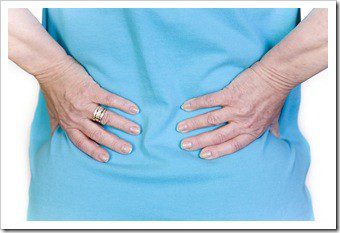
What Are My Options When Back Pain Strikes in New Fairfield

New Fairfield Back Pain

Pain of any kind is a warning signal from your body that something is wrong. Some people prefer to silence their warning system with a pain killer and ignore the message their body is desperately trying to communicate. That would be akin to removing the battery from your smoke alarm because your are trying to...

Read More >>

Are you Stressed? Let Chiropractic Help!

Stress Relief

Stress that is short-lived can be beneficial in that it serves to focus our attention on important matters. However, when stress becomes ongoing and chronic, it can cause immense problems for the sufferer and may end up in depression. It can adversely affect our performance at work and elsewhere, and it can lead to a host of physical ailments, including cancer and heart disease, as it degrades our immune system and stresses our bodily functions. It can also provoke other psychological side-effects such as substance abuse.

Stress can be caused by a huge variety of incidents, both personal and professional. In most cases, though, it is the result of the difference between what we would like to happen in our lives, and what is really happening, or what we believe is happening.

How Chronic Stress affects us:

Stress causes the body to undergo certain reactions: alarm, resistance, and exhaustion. It is not just “in the mind”; it causes genuine physical reactions, including the release of epinephrine, or adrenaline, which is our “fight or flight” hormone. It also triggers the release of glucocorticoid cortisol, or hydrocortisone, which has anti-inflammatory and immunosuppressant effects. Excessive levels of this can retard growth and healing, and increase the chance of infection. Chronic symptoms lead to anxiety, hopelessness and then depression.

Psychological problems often lead to pain, which research shows can be worse than that caused by strenuous physical activity or repetitive motion. Low-back pain and headaches are particularly common, and persistent pain only exacerbates the psychological problems, such as trouble sleeping. A vicious cycle soon emerges where the stress fuels the physical which fuels the stress and so on.

Stress is a highly personal experience, dependent on our coping mechanisms and predisposition to emotional fatigue. Some people, for example, are able to release stress by venting their aggression verbally or physically, but this is only a temporary fix. Gender also has an effect on stress levels in terms of the types of trigger that affect the person. Women tend to be affected more by interpersonal problems, and illness in others, whereas men are more prone to work-related stress.

Work Stress:

Work is a major cause of stress, and is especially prevalent since the economic crisis took hold. The risk of high blood pressure and heart disease is just one of the effects. Research has demonstrated, however, that it is often our perception of the demands placed on us that affects us more than the reality of the situation. In other words, our attitude is key. If we can control our reactions, we can reduce our stress levels and the physical effects of stress. For example, stressed individuals who react angrily at work have markedly higher levels of morning cortisol and are prone to higher blood pressure.

Stress Relief:

With stress being so potentially damaging to our mental and physical health, our goal must be to find ways to ease the stress however we can, and if we cannot remove the triggers, we have to change our reaction to those triggers.

Radiating Health for Underweight Baby with Chiropractic

New Fairfield Baby Care

A baby born “down under” who was weak and underweight at birth is now living and walking normally thanks to Chiropractic. When Caylee Taylor was born in Mawson Lakes, Australia, she weighed just 3 pounds. This may have had to do with the fact that her twin sister weighed in at 7 pounds and there...

Read More >>

Understanding and Treating Scoliosis in New Fairfield

Scoliosis New Fairfield
Scoliosis is a condition that affects 5 to 7 million people in the United States, most often adolescents between the ages of 10 and 15, and more commonly girls, although it can affect any age. Over half a million visits to the doctor are made each year to either evaluate or treat scoliosis. As the condition can be inherited, a history of it occurring within a family, or current cases, should lead to evaluation of all the children by an appropriate professional.

What is scoliosis?

Scoliosis is a lateral (sideways) curvature of the spine where that curvature is greater than 10% from the vertical. Less than 10 degrees may simply be the result of postural changes. Although the nervous system works to keep your spine straight, problems can occur. Scoliosis may not exist in isolation, and lordosis (abnormal curvature toward the front) or kyphosis (abnormal curvature toward the back) may also be present. The vertebrae are also often rotated.

80% of the time, the cause of scoliosis remains unknown, and this is called idiopathic scoliosis. In the other cases, the condition will be the result of some form of trauma, neurological disease, tumor, or similar. Where postural problems, muscle spasms, or leg-length inequality cause the condition, it is known as functional scoliosis, and can often be corrected. Structural scoliosis, on the other hand, is not reducible with postural changes.

Scoliosis symptoms

Scoliosis can cause pain, and impair lung function or heart function. It can also lead to psychological problems such as poor self-esteem, especially because it so often happens at an age when peer pressure is at its most powerful.

With 4 out of 5 scoliosis sufferers, the spinal curvature is less than 20 degrees, and this is not normally visible to the untrained eye. Provided these cases do not appear to be worsening, there is no great cause for alarm. However, as children and adolescents have bodies that are still growing, mild curvatures can bend by a further 10 degrees or more in a matter of months. For this reason, evaluations should be made frequently.

Scoliosis evaluation

Scoliosis is evaluated by conducting a detailed family history and a physical examination that includes postural analysis. If a curvature is detected, further investigation is required to establish if there is any obvious cause of the problem, such as a birth defects or any prior injury

X-rays are a useful tool when the curvatures are pronounced, to check more thoroughly on the structure of the spine, and if the scoliosis is impinging upon anything else. The wrist is also often x-rayed because this is used to assess the patient’s skeletal age, as a barometer of where that person is in relation to the accepted norm, and for monitoring the progression of the condition. X-rays may be needed anything from once every 3 to 4 months, to once every few years, depending on the doctor’s feelings about the possible rate of progression.

A device called a Scoliometer can be employed to monitor progression once diagnosis is certain. This measures changes in the rib humps that are linked to scoliosis, and is painless, being a non-invasive technique.

Progression in scoliosis

The vast majority of scoliosis cases are mild, non-progressive, and there is no need for treatment. This is not true for one category, though, which is young girls with a curvature of at least 25 degrees, who have not yet menstruated for the first time. As there is relatively fast growth in the year before the first period, it follows that any curvature will also progress quickly. After the first period, this slows down.

Scoliosis treatment

Traditionally, scoliosis is treatable in three ways: observation, bracing, and surgery. The first option is the most common and is not really a treatment because nothing is actually done to the sufferer, for the reasons outlined above regarding its usually non-progressive state. Bracing is normally only applicable to children whose skeletons have not fully matured whose curvatures are between 25 and 45 degrees. In progressive cases beyond 45 degrees, and/or if the function of the heart, lungs, or other vital organs may be affected, surgery becomes an option.

Today the treatment option which is showing the most promise is a combination of spinal adjustments or manipulation, therapeutic exercise, and electrical muscle stimulation. These can be especially helpful to anyone whose scoliosis is causing them spinal pain such as lower back pain, neck pain and also headaches. A general piece of advice, exercise is both advocated and well-tolerated for patients with scoliosis. Most importantly, it should be remembered that most people who have scoliosis lead their lives no differently to anyone else, however, as their spine is exposed to increased levels of strain mechanically it is important to ensure that extra efforts are made to help keep the spine healthy. Chiropractic care is a great method of ensuring spinal health.

Overworked and Under Pressure – Stress on the Job

New Fairfield Work Stress

Stress has been called the spice of life, the common cold of the psyche, and even a socially acceptable form of mental illness. No doubt, stress can be beneficial for example, a deadline can help us focus and become more alert and efficient. Persistent or excessive stress, however, can undermine performance and make us vulnerable...

Read More >>

Chiropractic Life and Wellness Center