Posts Tagged ‘Back Pain’
Welcome to Chiropractic Life and Wellness Center's Back Pain Archive. Here you can learn more about Chiropractic Life and Wellness Center, Chiropractic, and Dr. Brandon Chorney, today's choice for Chiropractors in New Fairfield, CT. Read Dr. Brandon Chorney's Chiropractic Back Pain for the health of it.
We look forward to serving you! Call - 203-746-6543.
by Dr. Brandon Chorney | Jun 18, 2019 | Health Articles

src="https://chirolifewellness.com/wp-content/article-images/travel-headaches-2016-b.jpg" width="320" border="0" />Buckle up! Our traveling season is upon us. Despite the saying "getting there is half the fun," planes, trains, and automobiles can put a real strain on our summer holiday fun. So let's start this season off right, and follow these tips to survive the physically demanding prospect of traveling to your...
Read More >>
by Dr. Brandon Chorney | Apr 25, 2013 | Health Articles
Traveling can be rough on the body. Whether you are traveling alone on business or on your way to a sunny resort with your family, long hours in a car or an airplane can leave you stressed, tired, stiff and sore.
“Prolonged sitting can wreak havoc on your body,” says Dr. Scott Bautch, a member of the American Chiropractic Association’s (ACA) Council on Occupational Health. “Even if you travel in the most comfortable car or opt to fly first class, certain pressures and forces from awkward positions can result in restricted blood flow. One of the biggest insults to your system from prolonged sitting is the buildup of pressure in the blood vessels in your lower legs. Contracting and relaxing the muscles helps the blood flow properly.”
Use the following to help fight the pains and strains of travel before they occur.

Warm Up, Cool Down
Treat travel as an athletic event. Warm up before settling into a car or plane, and cool down once you reach your destination. Take a brisk walk to stretch your hamstring and calf muscles.
In the Car:
- Adjust the seat so you are as close to the steering wheel as comfortably possible. Your knees should be slightly higher than your hips. Place four fingers behind the back of your thigh closest to your knee. If you cannot easily slide your fingers in and out of that space, you need to re-adjust your seat.
- Consider a back support. Using a support behind your back may reduce the risk of low-back strain, pain or injury. The widest part of the support should be between the bottom of your rib cage and your waistline.
- Exercise your legs while driving to reduce the risk of any swelling, fatigue or discomfort. Open your toes as wide as you can, and count to 10. Count to five while you tighten your calf muscles, then your thigh muscles, then your gluteal muscles. Roll your shoulders forward and back, making sure to keep your hands on the steering wheel and your eyes on the road.
- To minimize arm and hand tension while driving, hold the steering wheel at approximately 3 o’clock and 7 o’clock, periodically switching to 10 o’clock and 5 o’clock.
- Do not grip the steering wheel. Instead, tighten and loosen your grip to improve hand circulation and decrease muscle fatigue in the arms, wrists and hands.
- While always being careful to keep your eyes on the road, vary your focal point while driving to reduce the risk of eye fatigue and tension headaches.
- Take rest breaks. Never underestimate the potential consequences of fatigue to yourself, your passengers and other drivers.
In an Airplane:
- Stand up straight and feel the normal “S” curve of your spine. Then use rolled-up pillows or blankets to maintain that curve when you sit in your seat. Tuck a pillow behind your back and just above the belt line and lay another pillow across the gap between your neck and the headrest. If the seat is hollowed from wear, use folded blankets to raise your buttocks a little.
- Check all bags heavier than 5-10 percent of your body weight. Overhead lifting of any significant amount of weight should be avoided to reduce the risk of pain in the lower back or neck. While lifting your bags, stand right in front of the overhead compartment so the spine is not rotated. Do not lift your bags over your head, or turn or twist your head and neck in the process.
- When stowing belongings under the seat, do not force the object with an awkward motion using your legs, feet or arms. This may cause muscle strain or spasms in the upper thighs and lower back muscles. Instead, sit in your seat first, and using your hands and feet, gently guide your bags under the seat directly in front of you.
- While seated, vary your position occasionally to improve circulation and avoid leg cramps. Massage legs and calves. Bring your legs in, and move your knees up and down. Prop your legs up on a book or a bag under your seat.
- Do not sit directly under the air controls. The draft can increase tension in your neck and shoulder muscles.
Safe Travel For Children:
- Always use a car seat in a car when traveling with children below the age of 4 and weighing less than 40 pounds.
- Ask the airline for their policy on child car seat safety. Car seats for infants and toddlers provide added resistance to turbulent skies, and are safer than the lap of a parent in the event of an unfortunate accident.
- Make sure the car seat is appropriate for the age and size of the child. A newborn infant requires a different seat than a 3-year-old toddler.
- Car seats for infants should always face the rear. In this position, the forces and impact of a crash will be spread more evenly along the back and shoulders, providing more protection for the neck.
- Car seats should always be placed in the back seat of the car-ideally in the center. This is especially important in cars equipped with air bags. If an air bag becomes deployed, the force could seriously injure or kill a child or infant placed in the front seat.
- Make sure the car seat is properly secured to the seat of the vehicle and is placed at a 45-degree angle to support the head of the infant or child.
Chiropractic Care Can Help…
If you follow these simple tips, you can enjoy pain-free, safe travel. If you do experience pain and stress on your back, doctors of chiropractic are trained and licensed to diagnose and treat problems of the spine and nervous system.
by Dr. Brandon Chorney | May 31, 2012 | Health Articles
Traveling can be rough on the body. Whether you are traveling alone on business or on your way to a sunny resort with your family, long hours in a car or an airplane can leave you stressed, tired, stiff and sore.
“Prolonged sitting can wreak havoc on your body,” says Dr. Scott Bautch, a member of the American Chiropractic Association’s (ACA) Council on Occupational Health. “Even if you travel in the most comfortable car or opt to fly first class, certain pressures and forces from awkward positions can result in restricted blood flow. One of the biggest insults to your system from prolonged sitting is the buildup of pressure in the blood vessels in your lower legs. Contracting and relaxing the muscles helps the blood flow properly.”
Use the following to help fight the pains and strains of travel before they occur.

Warm Up, Cool Down
Treat travel as an athletic event. Warm up before settling into a car or plane, and cool down once you reach your destination. Take a brisk walk to stretch your hamstring and calf muscles.
In the Car:
- Adjust the seat so you are as close to the steering wheel as comfortably possible. Your knees should be slightly higher than your hips. Place four fingers behind the back of your thigh closest to your knee. If you cannot easily slide your fingers in and out of that space, you need to re-adjust your seat.
- Consider a back support. Using a support behind your back may reduce the risk of low-back strain, pain or injury. The widest part of the support should be between the bottom of your rib cage and your waistline.
- Exercise your legs while driving to reduce the risk of any swelling, fatigue or discomfort. Open your toes as wide as you can, and count to 10. Count to five while you tighten your calf muscles, then your thigh muscles, then your gluteal muscles. Roll your shoulders forward and back, making sure to keep your hands on the steering wheel and your eyes on the road.
- To minimize arm and hand tension while driving, hold the steering wheel at approximately 3 o’clock and 7 o’clock, periodically switching to 10 o’clock and 5 o’clock.
- Do not grip the steering wheel. Instead, tighten and loosen your grip to improve hand circulation and decrease muscle fatigue in the arms, wrists and hands.
- While always being careful to keep your eyes on the road, vary your focal point while driving to reduce the risk of eye fatigue and tension headaches.
- Take rest breaks. Never underestimate the potential consequences of fatigue to yourself, your passengers and other drivers.
In an Airplane:
- Stand up straight and feel the normal “S” curve of your spine. Then use rolled-up pillows or blankets to maintain that curve when you sit in your seat. Tuck a pillow behind your back and just above the belt line and lay another pillow across the gap between your neck and the headrest. If the seat is hollowed from wear, use folded blankets to raise your buttocks a little.
- Check all bags heavier than 5-10 percent of your body weight. Overhead lifting of any significant amount of weight should be avoided to reduce the risk of pain in the lower back or neck. While lifting your bags, stand right in front of the overhead compartment so the spine is not rotated. Do not lift your bags over your head, or turn or twist your head and neck in the process.
- When stowing belongings under the seat, do not force the object with an awkward motion using your legs, feet or arms. This may cause muscle strain or spasms in the upper thighs and lower back muscles. Instead, sit in your seat first, and using your hands and feet, gently guide your bags under the seat directly in front of you.
- While seated, vary your position occasionally to improve circulation and avoid leg cramps. Massage legs and calves. Bring your legs in, and move your knees up and down. Prop your legs up on a book or a bag under your seat.
- Do not sit directly under the air controls. The draft can increase tension in your neck and shoulder muscles.
Safe Travel For Children:
- Always use a car seat in a car when traveling with children below the age of 4 and weighing less than 40 pounds.
- Ask the airline for their policy on child car seat safety. Car seats for infants and toddlers provide added resistance to turbulent skies, and are safer than the lap of a parent in the event of an unfortunate accident.
- Make sure the car seat is appropriate for the age and size of the child. A newborn infant requires a different seat than a 3-year-old toddler.
- Car seats for infants should always face the rear. In this position, the forces and impact of a crash will be spread more evenly along the back and shoulders, providing more protection for the neck.
- Car seats should always be placed in the back seat of the car-ideally in the center. This is especially important in cars equipped with air bags. If an air bag becomes deployed, the force could seriously injure or kill a child or infant placed in the front seat.
- Make sure the car seat is properly secured to the seat of the vehicle and is placed at a 45-degree angle to support the head of the infant or child.
Chiropractic Care Can Help…
If you follow these simple tips, you can enjoy pain-free, safe travel. If you do experience pain and stress on your back, doctors of chiropractic are trained and licensed to diagnose and treat problems of the spine and nervous system.
by Dr. Brandon Chorney | Aug 2, 2011 | Health Articles

In the past, a patient presenting to a doctor with rheumatoid arthritis would not be told to “take a hike”. First of all, that would have sounded rude, but as a genuine piece of advice it just didn’t figure in a doctor’s thoughts. Arthritis was looked on as a natural and unavoidable part of getting old, and was taken as a message that the patient had to ease back on their daily activities or risk aggravating the condition.
Not any more. Current research and clinical results tell us that an arthritis sufferer does not have to spend their remaining years popping pills and lying in bed.
What Is Rheumatoid Arthritis?
The word “arthritis” translates as “joint inflammation” and it is often used to describe an assortment of rheumatic diseases, of which there are more than 100 conditions. These include the commonly-known gout, osteoarthritis, fibromyalgia, and psoriatic arthritis. Rheumatoid arthritis is also classified as a rheumatic disease and affects 2.1 million people in the United States, equating to around 1% of the population. Usually considered a disease of middle to old age, rheumatoid arthritis can also manifest in a person’s younger years.
The physical effects of rheumatoid arthritis include pain, swelling, stiffness, and a loss of function in the joints. It differs from other forms of arthritis by having the following characteristics:
- Joints that are tender, warm, and swollen.
- Fatigue, sometimes with a fever, and a general feeling of malaise.
- Pain and stiffness that lasts more than half an hour following a long rest.
- A symmetrical pattern of affected areas. Where one hand is affected, so is the other.
- Most frequently affected are the wrist and finger joints closest to the hand, although it can also take its toll on the joints of the neck, shoulder, elbow, hip, knee, ankle, and foot.
- The disease can persist for many years and may have systemic effects; that is, affect more than the joints.
Individuals can never know exactly what to expect with rheumatoid arthritis. It hits people in different ways. Some may suffer mildly for a few months then become symptom-free. Then again, symptoms of mild arthritis may last for years, with periodic flare-ups alternating with periods of remission. Cases of severe arthritis, on the other hand, tend to produce a chronic pain that does not retreat and ends up causing serious joint damage and disability.
What About Exercise?
Nowadays, regular exercise is seen as a crucial part of arthritis management because it helps to maintain muscle tone, joint mobility, overall flexibility, cardiovascular endurance, and weight control. However, there must be a balance between exercise and rest, because rest is also necessary to reduce joint inflammation, pain, and fatigue. How this is handled should be dictated by a person’s individual circumstances. During the active phase of arthritis, it is advisable to take more rest, while more exercise would be the prescription during periods of remission. When dealing with acute flare-ups affecting the whole system or acute local joint flares, the advice is that patients gently put their joints through a full range of motion once a day, interspersed with periods of rest. A healthcare professional will be able to advise on exactly what proportion of exercise/rest is best for the individual.
These are the exercises most commonly recommended for arthritis sufferers:
| Exercise |
Benefits |
Frequency |
| Range-of-motion, such as stretching and dance. |
Promotes normal joint movement and flexibility. |
Daily, or at least every other day. |
| Strengthening, such as weight lifting. |
Promotes muscle strength to support and protect affected joints. |
Every other day, unless severe pain and swelling restrict it. |
| Aerobic or endurance, such as walking, cycling, swimming. |
Promotes cardiovascular health, muscle tone and weight control. Swimming is the most low-impact and risk-free of these. |
Three times a week for 20 to 30 minutes, unless severe pain and swelling restrict it. |
|
Patients should talk to their healthcare provider if they experience any of the following:
- Fatigue that is unusually persistent or severe
- Increased weakness
- Restricted range of motion, beyond that normally suffered
- Increase in joint swelling
- Pain following exercise that persists for more than an hour
For an arthritis sufferer, the doctor of chiropractic will help create and hone their exercise programs to gain optimum results while minimizing any discomfort. Crucially, chiropractors can identify those exercises that are to be considered off-limits, according to the specific circumstances of the patient.
Nutrition for the Rheumatoid Arthritis Patient
The drug regimen for arthritis patients is aimed at suppressing the immune system and therefore slowing the progression of the disease, but an important complimentary approach lies in sticking to correct sources of nutrition. This can help to alleviate inflammation and retard the disease.
Some of the foods and nutritional supplements identified as useful for managing arthritis are:
- Fatty-acid supplements: eicosapentaenoic acid (EPA), docosahexaenoic acid (DHA), and gamma linolenic acid (GLA). Some studies have shown that these supplements have efficacy in helping reduce pain and inflammation, thus lessening a patient’s dependence on corticosteroids. Deep-sea fish, such as salmon, tuna, herring and halibut are good sources of EPA and DHA. GLA is harder to find in food sources, as oppose to supplement form, but is present in foods such as black currants and borage seeds.
- The spice turmeric may also be helpful, and it has been shown that a 95% curcuminoid extract can significantly reduce inflammation and joint pain.
- Studies have also shown that ginger extract, nettle leaf extract, a vegetarian diet and a low-allergen diet can all help to reduce the pain and inflammation of rheumatoid arthritis.
Having said that, the benefits and risks of these agents and others are still being researched, therefore you should always consult with a healthcare professional before embarking on any change in diet or supplementation program. This is especially the case if you are taking doctor-prescribed medications for your condition.
How Can Your Doctor of Chiropractic Help?
Your doctor of chiropractic can help you plan an exercise program tailored to your individual circumstances, with the aim of:
- Helping restore to your joints any lost range of motion.
- Improving your flexibility and overall physical endurance.
- Increasing both your muscle tone and strength.
Chiropractors can also offer advice on optimizing your nutritional intake and on which supplements may be beneficial, all designed to reduce and control your joint pain and inflammation.
by Dr. Brandon Chorney | Jun 14, 2011 | Health Articles

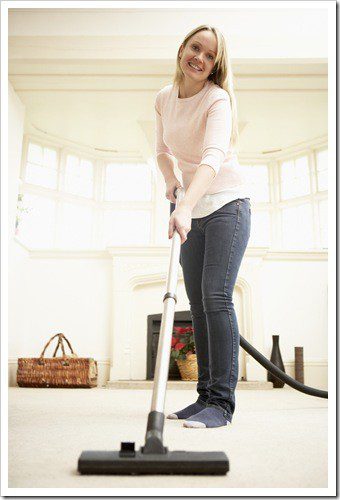
Not many people like doing housework. For most, it’s a real pain in the aaah … what’s the word? Sacroiliac. But it’s not just the disruption it causes to your longed-for life of leisure; it really can be a pain. Literally. The activities you carry out around the house may not seem too physically demanding,...
Read More >>