Archive for the ‘Health Articles’ Category
Welcome to Chiropractic Life and Wellness Center's Health Articles Archive. Here you can learn more about Chiropractic Life and Wellness Center, Chiropractic, and Dr. Brandon Chorney, today's choice for Chiropractors in New Fairfield, CT. Read Dr. Brandon Chorney's Chiropractic Health Articles for the health of it.
We look forward to serving you! Call - 203-746-6543.
by Dr. Brandon Chorney | Sep 13, 2016 | Health Articles

With strength as the new pretty, we would love to have "Abs of Steel" to show off but also the power of the core muscles to help us achieve further health and agility. Unfortunately, the abdominal muscles are located in the front center of our body. Achieving maximum results to your core muscles requires following...
Read More >>
by Dr. Brandon Chorney | Sep 6, 2016 | Health Articles
Has your new description lately been the "Couch Ninja"? Have you and your loved ones been cheering more often from the sidelines rather than getting out there and taking part? If you have answered yes to either one of those questions, we know your next thought will be that "I would love to, but it...
Read More >>
by Dr. Brandon Chorney | Aug 30, 2016 | Health Articles
We are in full swing of the digital age. All correspondence is now primarily virtual. This interaction between humans includes business, casual acquaintances and worse, our more intimate partners. With so much time spent in our virtual world, our physical bodies, especially our neck and back, are suffering from diseases inclusive of obesity, migraine headaches...
Read More >>
by Dr. Brandon Chorney | Aug 23, 2016 | Health Articles
Fall sports season is here! Whether you are a youth player, weekend warrior, or a professional athlete, you can be injured playing any sport. Injuries are caused by a variety of factors including accidents, poor conditioning or training practices, not wearing proper protective equipment or an inadequate warm-up. Some of the most frequent sports injuries...
Read More >>
by Dr. Brandon Chorney | Aug 16, 2016 | Health Articles
The human body is one of the most amazing machines on Earth. It is designed to be self-sustaining as it is constantly making repairs and with proper nerve flow regenerating new healthy cells.
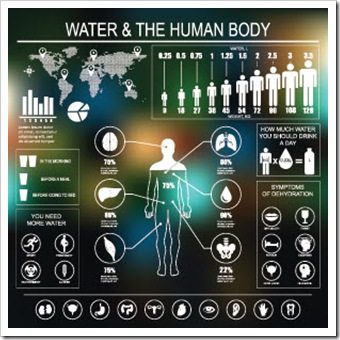
Our bodies mass are almost 99% made up of six elements: oxygen, carbon, hydrogen, nitrogen, calcium, and phosphorus. With water being the most abundant chemical compound in living human cells, accounting for 65-90% of each cell.
With water being the dominant factor in our elemental makeup, how important is keeping our bodies hydrated? Critical!
To learn more read on.
Let Us “Sea” Your Body Of Health
Our bodies contain more water than anything else – about 65-90 percent of our total body weight. This water helps regulate our bodies temperature, transports nutrients, and helps remove waste. Every day we lose water when we breathe, sweat, urinate, and defecate and every day we must replenish the water not only lost with normal daily activities but as an increased priority when the water is lost by exercise and exerting activities.
Crunching The Numbers
Statistically, the human body can survive three to five weeks without food, three to five days without water, three to five minutes without oxygen, and three to five minutes without nerve supply.
The Institute of Medicine of the National Academy continually reviews research evidence on adequate water intake, and their most recent suggestions for daily intake are these recommendations:
- Men: 13 cups (about 10.5 cups from beverages)
- Women: 9 cups (about 7 cups from beverages)
- Pregnant women: 10 cups (about 8 cups from beverages)
- Breastfeeding women: 13 cups (about 10.5 cups from beverages)
Am I Drinking Enough Water?
Most people can gauge their water intake by simply looking at the color of their urine. When you are getting enough water, your urine should be a pale yellow, and you will urinate several times a day.
Unfortunately, urine color doesn’t work for everyone. When taking dietary supplements that contain B vitamins, your urine will be a bright yellow. Other certain medications can change the color of your urine, as well.
The Right Hydration Equation
One big question that we are often asked is, “How much water do we need to drink every day?”
Although that is a simple question, it does not have an easy answer. It depends on some environmental and physical factors that can change every day. An additional factor into the equation is the amount and type of food that you eat. On average 20 percent of your water intake can come from the foods you eat with the remaining 80 percent coming from beverages, including water, coffee, tea, and anything else liquid.
One of the simpler formulas that we have found works well is simply drinking fluids each day that equal half of your body weight, in ounces. For example, we advise that a 200 lb. Person to drink 100 ounces of water a day. With the intake of water being small and often rather than huge quantities all at once.
Ready To Tutor You On Your Health!
You and your family’s health matters to us. Please feel free to contact us with any questions concerning this post or another health topic.
We are always happy to hear from our awesome patients!
by Dr. Brandon Chorney | Aug 9, 2016 | Health Articles
The American lifestyle over the last few decades has given rise to today’s leading cause of infirmity. Unfortunately, lower back pain is so common that it affects almost 90% of adults. The majority also suffer from lumbar arthritis as a contributing factor to their lower back pain. Spinal arthritis is a degenerative process that develops over time in response to the stresses placed on the spinal joints. Spinal arthritis can cause symptoms from mild to severe back pain as well as spinal stiffness.
Understanding Your Spine
The spine is composed of twenty-four moving segments, known as vertebrae, classified into three regions: cervical (neck), thoracic (mid-back), and lumbar (lower back). Between the spinal vertebrae are intervertebral discs composed of an outer ligamentous layer (annulus fibrosis) and a central gelatinous layer (nucleus pulposis). The discs are anchored to the vertebrae by the collagen fibers of the annulus fibrosis; allowing movement between vertebrae and the distribution of weight bearing forces from one vertebra to the next in the spine.
The intervertebral discs often lose their elasticity and hydration with age or as the result of an injury. The loss of elasticity decreases their ability to handle all the load bearing forces of daily activity. When the discs thin, this changes the relative position of the vertebrae and the connective tissues throughout the rest of the spine. Over time, this thinning of the disc could progress to where the vertebra is effectively lying on the next vertebra. The loss of disc space often results in increased pain and decreased ranges of motion.
Ultimately, this pattern of degeneration can lead to microfractures and cartilage injury. Although the body tries to replace and repair the damage, it is often insufficient to overcome the degenerative process on without assistance.
As the joint surface erodes there is an increase in mechanical stress on all the joints of the spine. The body’s natural response to this stress is the formation of new bony outgrowths called osteophytes. In the spine, this process is commonly found in the facet joints and on the edge of the vertebral bodies of the lumbar spine. If combined with compression, bulging discs, and hypertrophy of spinal ligaments then the size of the spinal canal may decrease causing spinal stenosis. Compression or injury to the spinal cord and nerves can occur with spinal stenosis.
What Are The Symptoms?
The classic symptomatology of arthritis includes joint pain, swelling, and stiffness. Lumbar arthritis often results in lower back or pelvic pain. Arthritis sufferers may have difficulty with mobility secondary to postural changes and decreased flexibility.
As with most forms of osteoarthritis, pain and stiffness are the most pronounced symptoms in the morning. As movement increases over the course of the day, the symptoms tend to subside. In general, if there is no evidence of nerve root compromise, pain from an arthritic spine is localized to the low back with possible dull aching and referred pain in the buttocks.
Patients with degenerative changes resulting in spinal stenosis may experience numbness, tingling, or weakness in the legs due to irritation of the lumbar nerve roots.
How is Arthritis in the Lumbar Spine Diagnosed?
A chiropractic physician can make the diagnosis of lumbar arthritis when the variety of symptoms and physical exam are consistent with degenerative changes in the spine.
For instance, a description of back pain for an extended period of time that increases with mechanical stress may alert your doctor to the presence of lumbar arthritis. Therefore, it is important to provide your chiropractic physician with detailed information about your back pain including timing, severity, and exacerbating or alleviating factors.
The physical exam will focus on the range of motion within your spine, muscle strength, and reflexes within your legs. Patients with lumbar arthritis will notice pain when bending backward because this places maximal pressure on the osteoarthritic facet joints. Likewise, patients may find that the pain decreases when bending forward because this relieves joint pressure.
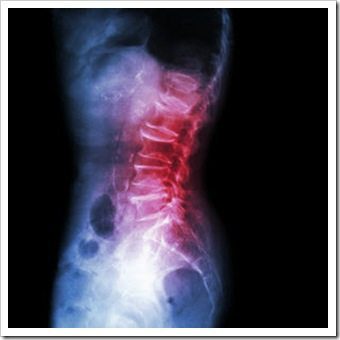
An X-ray will likely be ordered to be able to have a detailed look at the bones that make up the lumbar spine. Specifically, your chiropractic physician will look for new bone growth (osteophyte formation) and the narrowing of the intervertebral disc space. If a more detailed look is necessary, a CT (computed topography) or an MRI (magnetic resonance imaging)-may be ordered.
What Treatment Options Are Available?
Lumbar arthritis is usually responsive to conservative management.
During an acute attack of low back pain, relative rest that avoids activities that aggravate the symptoms may reduce inflammation. Drinking moderate amounts of water frequently while minimizing caffeinated drinks will also be beneficial in helping hydrate the discs.
For long term relief, lifestyle modification must be undertaken. This includes weight loss when appropriate as it will have a tremendous impact on reducing back pain due to the lumbar spine bearing the weight of the upper body and weight of the head.
Exercise is also critical as it will contribute to reducing weight while increasing muscle strength to support the lower back. You should consult your chiropractic physician before beginning any exercise or diet program.
Your chiropractor and their spinal rehabilitation team may prescribe spinal decompression in combination with rehabilitative therapy. Working the rehabilitative team to design a proper exercise regimen will be useful for strengthening core muscles and minimizing your back pain.
We Can Help!
Our team understands that long-term back pain is not only physically debilitating but emotionally exhausting. To serve our community, we have built an expert team committed to working together harmoniously to help you or your loved ones recapture the quality of life they desire – pain-free!