by Dr. Brandon Chorney | Jul 23, 2020 | Health Articles

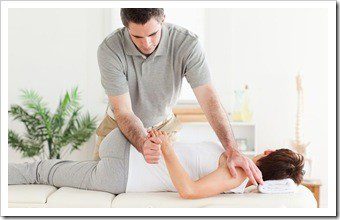
Are you a weekend warriors or a well-trained athlete who is suffering with an injury?
If so, let us explore on of your most often asked questions:
- When can I start exercising?
- When can I get back to my sport?
- What can I do to prevent this from happening again?
The answers to these questions are relatively straightforward. But for some, injuries continue to happen. Which leads to the key question:
- Why did this happen to me?
This is the hardest question to answer. Some injuries may occur even when you’re doing the things you’re supposed to be doing. Sometimes you just have to shrug your shoulders and move on. But it’s also very important to continue to try to discover the underlying causes.
Investigation Reveals
If we dig deeper, we’ll find that there are three main sources of training injuries: (1) under-preparation, (2) over-training, and (3) lack of focus or not paying attention.
Under-preparation means doing things you’re not ready to do. People who have never done aerobic exercise go out and try to run five miles. People who have never done strength training go to the gym and try to lift weights that are too heavy. People who have never taken a yoga class go to one, like it, and then go every day for a week.
These exercise patterns can be dangerous, physically, and may directly lead to injury. A 16-year-old teenager has some leeway and can get away with making a variety of training errors. This may even be true for those who are in their mid-20s. But persons who are older need to train on a trajectory. Good principles to follow include starting slowly, starting with the basics, and making sure to include rest days in your training program. Build up your strength and stamina. Doing more than you’re ready to do will send you straight to your chiropractor’s office or even to the hospital.
Over-training means doing too much. Most of us are guilty of this. For example, you love to run, you build up your weekly mileage to a good level, but then you keep piling on distance. All of a sudden you’ve got a stress fracture in your leg or a bad strain of a calf muscle.
How do you know when you’re over-training?
The key is to train smart, and to be aware of the possibility of over-training. The temptation to do more is always there, but the result is never good. The short-term gratification is completely outweighed by the frustration and loss of conditioning resulting from injury-enforced down-time.
What about focus and paying attention?
Many injuries happen during normal training because the person’s mind wandered off. People pay more attention to the TV or to their incoming text messages than they do to the equipment they’re using or the weight they’re lifting. The result is an injury, sometimes a bad one. In fact, you’re very unlikely to sustain an injury during normal training if you’re completely focused. Maintaining focus is part of the discipline of training.
A big part of the assessment process is the acquisition of knowledge. In the realm of exercise and fitness, some personal knowledge of bio-mechanics can go a very long way toward preventing injuries.
Want to learn more?
Contact us today so we can help you learn more about human bio-mechanics and physical performance.
by Dr. Brandon Chorney | Jul 16, 2020 | Health Articles
Our Team this summer would like to help you better understand a chronic inflammatory response and explain how it manifests in the body based on two triggers: genetics and lifestyle. Our family history can provide us with a sneak peak of which health issues we may be at increased risks for developing. However, our lifestyle...
Read More >>
by Dr. Brandon Chorney | Jul 9, 2020 | Health Articles
It always comes at the most in opportune times, but at one time or another, we have all experienced the discomfort of bloating, abdominal pain, gas, diarrhea or constipation. Unfortunately for many people this has become a daily occurrence. Traditionally, triggers have thought to have been anything from stress, eating certain foods, stomach or bowel...
Read More >>
by Dr. Brandon Chorney | Jul 2, 2020 | Health Articles
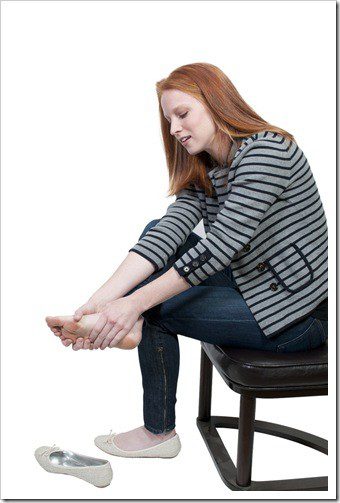
Every step you take and every move you make can be exhaustively painful if you suffer with pain especially in the foot or heel. This discomfort can be caused by many different types of ligament inflammations. However, plantar fasciitis can cause more inconvenience than most. This is due to the fact that the ligament is used every time you take a step, recovery and resting it is extremely difficult.
Understanding Plantar Fasciitis
The Plantar Fascia is the ligament that connects the ball of your foot to your heel and can sometimes be overstretched which leads to severe pain in the heel. However, it does not have to become a chronic condition and can be treated with a series of simple exercises.
The Risk is Greater for Those With Flat Feet
Those people with flat feet, have rolling in on the feet or high arches are at a greater risk of developing plantar fasciitis. All of these factors contribute to a weakening of the foot and therefore strengthening of the foot is essential.
Factors that will put strain on the plantar fascia are standing for long periods of time and being overweight with bad posture and or incorrect shoes. Over time these factors could lead to plantar fasciitis
Simple Exercises For Plantar Fasciitis:
- Sitting on the floor with your legs straight out in front of you, loop a towel or belt around the ball of your foot and pull back slowly until you feel a good pull in your calf muscle. Hold for 30 seconds and repeat 3 times. Repeat with the other leg.
- Stand facing a wall at about arm’s length and lunge forward with one leg while keeping the other behind you with the heel flat on the floor. You should feel the stretch in the calf muscle. Hold for 30 seconds and then switch to the other leg. Repeat the sequence a few times a day.
- To stretch the plantar fascia, use a wall or stair to press the bottom your toes against so that they extend upward, while the ball of your foot remains touching the floor. Hold for 45-60 seconds on each foot and repeat twice. Sports doctors recommend this be done twice a day.
- Massaging the plantar fascia by rolling your foot slowly back and forth over a rolling pin or drink can for a few minutes each day can also help to relieve plantar fasciitis.
Avoid any exercises that require a repetitive motion and force with a hard surface on the foot, such as running or jogging.
We Can Help!
Our expert team is here to assist you on your road to recovery. Please call today for a examination and consultation and take that first step to recovery.
by Dr. Brandon Chorney | Jun 25, 2020 | Health Articles
Are you one of the many who are suffering with Carpal Tunnel Syndrome? You may not realize that a solution is nearer than you think! The Reality of Carpal Tunnel Carpal Tunnel Syndrome typically starts off as pain or numbness and tingling in the hands or wrists. It receives the name from the carpal bones...
Read More >>