by Dr. Brandon Chorney | Jun 7, 2013 | Our Videos
Visit https://chirolifewellness.com to learn more about back pain relief in New Fairfield, CT. To schedule an appointment call 203-746-6543.
Chiropractic Life and Wellness Center
3 Route 39
New Fairfield, CT 06812
Phone: 203-746-6543
by Dr. Brandon Chorney | Jun 7, 2013 | Our Videos
Visit https://chirolifewellness.com to learn more about back pain relief in New Fairfield, CT. To schedule an appointment call 203-746-6543. Chiropractic Life and Wellness Center 3 Route 39 New Fairfield, CT 06812 Phone: 203-746-6543...
Read More >>
by Dr. Brandon Chorney | Jun 4, 2013 | Health Articles
Oh those teenage years of frustration
If you have ever wondered why the teenage years are so difficult for parents (and often the teens themselves) you need look no further than their brain. The brain undergoes rapid and profound development during the teen years, much more so than during most of childhood. It is a time when the areas of the brain involved in the calculation of risk, rewards and decision making go through increasingly major changes. This may explain why late adolescence (between ages 15 and 19) has a six times greater mortality rate than those in late childhood and early adolescence (between ages 10 and 14).
Research conducted by scientists using magnetic resonance imaging (MRI) from early childhood through adulthood has mapped the many changes that the developing brain makes as it matures. They have found that the brain continues to develop into a person’s early 20s, with the frontal lobes that are responsible for reasoning and problem-solving being developed last.
Although the teenage brain is more impulsive and willing to take risks, it is also dynamic, vulnerable and stimulated by positive feedback. The reason for this is that the reward centers in teenage brains are highly responsive, while at the same time, the region of the brain associated with self-control is still not developed fully.
Dr. Jay Giedd, Chief of Brain Imaging at the Child Psychiatry Branch of the National Institute of Mental Health, says “The most surprising thing has been how much the teen brain is changing. By age six, the brain is already 95 percent of its adult size. But the gray matter, or thinking part of the brain, continues to thicken throughout childhood as the brain cells get extra connections, much like a tree growing extra branches, twigs and roots.”
Although the brain grows in gray matter significantly during childhood and early adolescence, the amount of gray matter actually begins to fall in mid-adolescence, which researchers say is a normal process of brain maturation.
Giedd says, “… the pruning-down phase is perhaps even more interesting, because our leading hypothesis for that is the “use it or lose it” principle. Those cells and connections that are used will survive and flourish. Those cells and connections that are not used will wither and die. So if a teen is doing music or sports or academics, those are the cells and connections that will be hard-wired. If they’re lying on the couch or playing video games or MTV, those are the cells and connections that are going [to] survive.”
Studies have shown that experiences early in life have a profound effect on the development of the teenage brain. Researchers at the University of Pennsylvania found that children who received a lot of cognitive stimulation and parental nurturing had a brain with a thicker outer cortex, which is important in thinking and memory. Another long-term study from the Institute of Cognitive Neuroscience in London discovered that there were major structural changes in the areas of the teenage brain that relate to empathy.
Adults should perhaps give teenagers more of a break. As Giedd says, “It’s sort of unfair to expect teens to have adult levels of organizational skills or decision-making before their brains are finished being built.”
by Dr. Brandon Chorney | May 30, 2013 | Health Articles
Whether you are a competitive athlete in training or a person who just wants to keep fit by visiting the gym frequently, protecting your back and spine from injuries during workouts is not only the most important but your first priority. Studies found that after injuries to the hand, injuries to areas ranging from the...
Read More >>
by Dr. Brandon Chorney | May 28, 2013 | Health Articles
Over the last few decades the number of total hip and knee replacement surgeries have been rising at an alarming rate. In the United States for total hip and replacement surgeries have increased more than 50% and 170%, respectively. Europe is also seeing similar rises for these procedures with some the northern European countries reporting...
Read More >>
by Dr. Brandon Chorney | May 23, 2013 | Health Articles
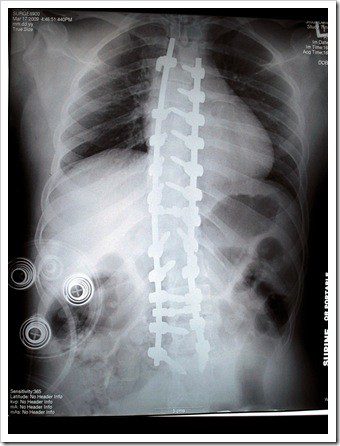
Scoliosis, an abnormal sideways curvature of the spine, primarily affects girls between the ages of 8 and 18. It will often onset with what appears to be a postural distortion: one shoulder higher than the other or the torso shifted or twisted to one side. However, if it is allowed to advance it can become...
Read More >>
by Dr. Brandon Chorney | May 21, 2013 | Health Articles
Most people that have experienced this painful condition will call it a "pinched nerve", exclaiming, "it feels like I've pinched a nerve". However, the majority of the time there's a bit more going on! Between each of the bones of the spine there are a pair of openings, which are individually called the intervertebral foramen...
Read More >>
by Dr. Brandon Chorney | May 20, 2013 | Our Videos
Visit https://chirolifewellness.com to learn more about a chiropractor in New Fairfield, CT who has the trust of his patients. Chiropractic Life and Wellness Center 3 Route 39 New Fairfield, CT 06812 Phone: 203-746-6543...
Read More >>
by Dr. Brandon Chorney | May 18, 2013 | Our Videos
Visit https://chirolifewellness.com to learn more about a chiropractor in New Fairfield, CT who has the trust of his patients. Chiropractic Life and Wellness Center 3 Route 39 New Fairfield, CT 06812 Phone: 203-746-6543...
Read More >>
by Dr. Brandon Chorney | May 16, 2013 | Health Articles
Today most people know that they “should” be doing regular exercise. However, for the vast majority it has been so many years, if ever, since they did regular exercise that they don’t even know where to begin. This tends to result in an inevitable merry-go-round of various training programs and routines. You probably know exactly...
Read More >>