by Dr. Brandon Chorney | Jul 30, 2013 | Health Articles

Our gardens this year are well underway after a late and cold spring. With the weather getting warmer and the rain bringing great growth, many people will spend more time outside mowing the lawn and pulling weeds. Gardening can provide a great workout, but with all the bending, twisting, reaching and pulling, your body may...
Read More >>
by Dr. Brandon Chorney | Jul 25, 2013 | Health Articles
Your sciatic nerve is the longest and widest nerve in your body, and runs from the lower back, down through the buttock, and all the way into the lower leg, where it controls the muscles in that area. It also provides sensation to the thighs, legs, and the soles of the feet. When the sciatic...
Read More >>
by Dr. Brandon Chorney | Jul 23, 2013 | Health Articles
Over the last few decades the number of total hip and knee replacement surgeries have been rising at an alarming rate. In the United States for total hip and replacement surgeries have increased more than 50% and 170%, respectively. Europe is also seeing similar rises for these procedures with some the northern European countries reporting...
Read More >>
by Dr. Brandon Chorney | Jul 18, 2013 | Health Articles
Our feet carry us everywhere that we want to go. They come in virtually every size and shape and are thrust into narrow spaces or raised up on four-inch heels to give us height. Victimized by bunions, calluses, plantar warts, and blisters. Subjected to hot sand, hard gravel and stones in the summer and occasionally...
Read More >>
by Dr. Brandon Chorney | Jul 16, 2013 | Health Articles
What is Working Smarter? According to the United States Department of Health and Human Services, ergonomics is the science of fitting workplace conditions and job demands to employee capabilities. An ergonomic assessment of the workplace critically appraises the physical work environment—followed by changes based on the assessment. Ergonomic principles are then used to make the...
Read More >>
by Dr. Brandon Chorney | Jul 11, 2013 | Health Articles
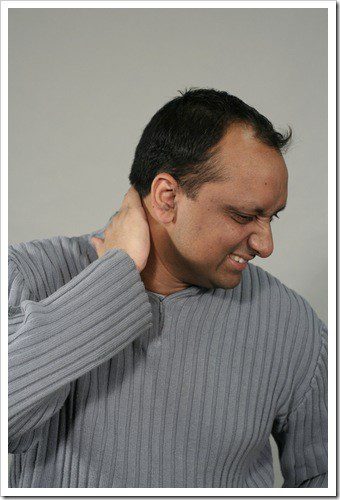
Your neck, also called the cervical spine, begins at the base of the skull and contains seven small vertebrae. Incredibly, the cervical spine supports the full weight of your head, which is on average about 12 pounds. While the cervical spine can move your head in nearly every direction, this flexibility makes the neck very susceptible to pain and injury.
The neck’s susceptibility to injury is due in part to biomechanics. Activities and events that affect cervical biomechanics include extended sitting, repetitive movement, accidents, falls and blows to the body or head, normal aging, and everyday wear and tear. Neck pain can be very bothersome, and it can have a variety of causes.
Most Common Causes:
Accidents and Injuries: A sudden forced movement of the head or neck in any direction and the resulting “rebound” in the opposite direction is known as whiplash. The sudden “whipping” motion injures the surrounding and supporting tissues of the neck and head. Muscles react by tightening and contracting, creating muscle fatigue, which can result in pain and stiffness. Severe whiplash can also be associated with injury to the intervertebral joints, discs, ligaments, muscles, and nerve roots. Car accidents are the most common cause of whiplash.
Age: Degenerative disorders such as osteoarthritis, spinal stenosis, and degenerative disc disease directly affect the spine.
- Osteoarthritis, a common joint disorder, causes progressive deterioration of cartilage. The body reacts by forming bone spurs that affect joint motion.
- Spinal stenosis causes the small nerve passageways in the vertebrae to narrow, compressing and trapping nerve roots. Stenosis may cause neck, shoulder, and arm pain, as well as numbness, when these nerves are unable to function normally.
- Degenerative disc disease can cause reduction in the elasticity and height of intervertebral discs. Over time, a disc may bulge or herniate, causing tingling, numbness, and pain that runs into the arm.
Daily Activities: Poor posture, obesity, and weak abdominal muscles often disrupt spinal balance, causing the neck to bend forward to compensate. Stress and emotional tension can cause muscles to tighten and contract, resulting in pain and stiffness. Postural stress can contribute to chronic neck pain with symptoms extending into the upper back and the arms.
Help Through Chiropractic
During your visit, your doctor of chiropractic will perform exams to locate the source of your pain and will ask you questions about your current symptoms and remedies you may have already tried. For example:
- When did the pain start?
- What have you done for your neck pain?
- Does the pain radiate or travel to other parts of your body?
- Does anything reduce the pain or make it worse?
Your doctor of chiropractic will also do physical and neurological exams. In the physical exam, your doctor will observe your posture, range of motion, and physical condition, noting movement that causes pain. Your doctor will feel your spine, note its curvature and alignment, and feel for muscle spasm. A check of your shoulder area is also in order. During the neurological exam, your doctor will test your reflexes, muscle strength, other nerve changes, and pain spread.
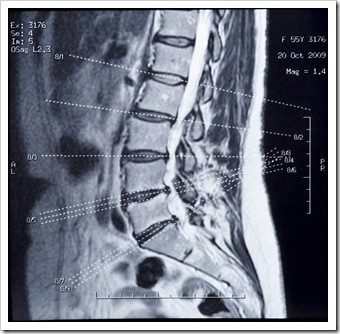
In some instances, your chiropractor might order tests to help diagnose your condition. An x-ray can show narrowed disc space, fractures, bone spurs, or arthritis. A computerized axial tomography scan (a CT or CAT scan) or a magnetic resonance imaging test (an MRI) can show bulging discs and herniations. If nerve damage is suspected, your doctor may order a special test called electromyography (an EMG) to measure how quickly your nerves respond.
Chiropractors are conservative care doctors; their scope of practice does not include the use of drugs or surgery. If your chiropractor diagnoses a condition outside of this conservative scope, such as a neck fracture or an indication of an organic disease, he or she will refer you to the appropriate medical physician or specialist. He or she may also ask for permission to inform your family physician of the care you are receiving to ensure that your chiropractic care and medical care are properly coordinated.
Cervical Adjustments
A neck adjustment (also known as a cervical manipulation) is a precise procedure applied to the joints of the neck, usually by hand. A neck adjustment works to improve the mobility of the spine and to restore range of motion; it can also increase movement of the adjoining muscles. Patients typically notice an improved ability to turn and tilt the head, and a reduction of pain, soreness, and stiffness.
Of course, your chiropractor will develop a program of care that may combine more than one type of treatment, depending on your personal needs. In addition to manipulation, the treatment plan may include mobilization, massage or rehabilitative exercises, or something else.
Chiropractic Care Research
One of the most recent reviews of scientific literature found evidence that patients with chronic neck pain enrolled in clinical trials reported significant improvement following chiropractic spinal manipulation.
As part of the literature review, published in the March/April 2007 issue of the Journal of Manipulative and Physiological Therapeutics, the researchers reviewed nine previously published trials and found “high-quality evidence” that patients with chronic neck pain showed significant pain-level improvements following spinal manipulation. No trial group was reported as having remained unchanged, and all groups showed positive changes up to 12 weeks post-treatment.
by Dr. Brandon Chorney | Jul 9, 2013 | Health Articles
Feeling great and having optimal health for out entire body includes exercise. It benefits your heart, lungs, joints and bones, and also your mind in the way it releases mood-enhancing endorphins. The downside is that physical activity can sometimes lead to injury, either because we are new to it, or we push beyond our limits,...
Read More >>
by Dr. Brandon Chorney | Jul 4, 2013 | Health Articles
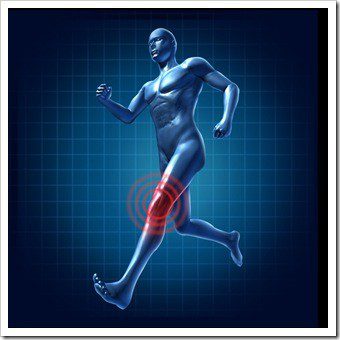
Many people struggle with long standing knee pain. It is far to common and yet many people learn to live with it. With a diminished quality of life, many people begin to look for solutions that will return them back to where pain and discomfort are no longer associated with their daily lives. Getting to...
Read More >>
by Dr. Brandon Chorney | Jul 2, 2013 | Health Articles
Our country for generations has a great passion for sports. With each generation, kids are discovering new and greater heights in the sports they are choosing to love to play. It is so easy to indulge their passion that, in the fun of it all, the importance of proper conditioning and healthy nutrition may be...
Read More >>