by Dr. Brandon Chorney | Nov 13, 2014 | Health Articles
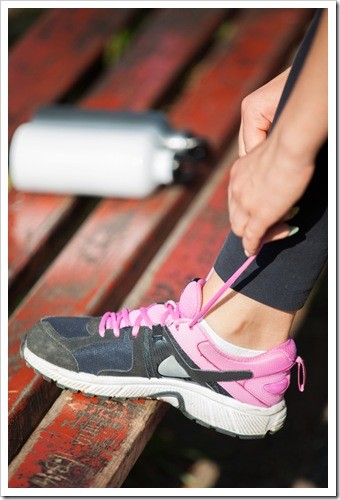
 Basketball season is about to begin! Whether we play professionally, for a school team, or for a league on Sunday, one on point game plan should be to invest in the proper shoes to avoid future injuries and unnecessary pain.
Too many people choose fashion over function when purchasing athletic shoes, not realizing that poor-fitting shoes can lead to pain throughout the body. Because footwear plays such an important role in the function of bones and joints—especially for runners and other athletes—choosing the right shoe can help prevent pain in your back, hips, knees, and feet.
Unfortunately, there is no such thing as the very best athletic shoe—every pair of feet is different, every shoe has different features, and overall comfort is a very personal decision. For this reason, it is recommended that you first determine your foot type: normal, flat, or high-arched.
The Normal Foot
Normal feet have a normal-sized arch and will leave a wet footprint that has a flare, but shows the forefoot and heel connected by a broad band. A normal foot lands on the outside of the heel and rolls slightly inward to absorb shock.
Best shoes: Stability shoes with a slightly curved shape.
The Flat Foot
This type of foot has a low arch and leaves a print that looks like the whole sole of the foot. It usually indicates an over-pronated foot—one that strikes on the outside of the heel and rolls excessively inward (pronates). Over time, this can cause overuse injuries.
Best shoes: Motion-control shoes or high-stability shoes with firm midsoles. These shoes should be fairly resistant to twisting or bending. Stay away from highly cushioned, highly curved shoes, which lack stability features.
The High-Arched Foot
The high-arched foot leaves a print showing a very narrow band—or no band at all—between the forefoot and the heel. A curved, highly arched foot is generally supinated or under-pronated. Because the foot doesn’t pronate enough, usually it’s not an effective shock absorber.
Best shoes: Cushioned shoes with plenty of flexibility to encourage foot motion. Stay away from motion-control or stability shoes, which reduce foot mobility.
When determining your foot type, consult with your doctor of chiropractic. He or she can help determine your specific foot type, assess your gait, and then suggest the best shoe match.
Helpful Tips
Consider the following tips before you purchase your next pair of athletic shoes:
- Match the shoe to the activity. Select a shoe specific for the sport in which you will participate. Running shoes are primarily made to absorb shock as the heel strikes the ground. In contrast, tennis shoes provide more side-to-side stability. Walking shoes allow the foot to roll and push off naturally during walking, and they usually have a fairly rigid arch, a well-cushioned sole, and a stiff heel support for stability.
- If possible, shop at a specialty store. It’s best to shop at a store that specializes in athletic shoes. Employees at these stores are often trained to recommend a shoe that best matches your foot type (shown above) and stride pattern.
- Shop late in the day. If possible, shop for shoes at the end of the day or after a workout when your feet are generally at their largest. Wear the type of socks you usually wear during exercise, and if you use orthotic devices for postural support, make sure you wear them when trying on shoes.
- Have your feet measured every time. It’s important to have the length and width of both feet measured every time you shop for shoes, since foot size often changes with age and most people have 1 foot that is larger than the other. Also, many podiatrists suggest that you measure your foot while standing in a weight bearing position because the foot elongates and flattens when you stand, affecting the measurement and the fit of the shoe.
- Make sure the shoe fits correctly. Choose shoes for their fit, not by the size you’ve worn in the past. The shoe should fit with an index finger’s width between the end of the shoe and the longest toe. The toe box should have adequate room and not feel tight. The heel of your foot should fit snugly against the back of the shoe without sliding up or down as you walk or run. If possible, keep the shoe on for 10 minutes to make sure it remains comfortable.
When Should I Buy A New Pair?
Once you have purchased a pair of athletic shoes, don’t run them into the ground. While estimates vary as to when the best time to replace old shoes is, most experts agree that between 300 and 500 miles is optimal. In fact, most shoes should be replaced even before they begin to show signs of moderate wear. Once shoes show wear, especially in the cushioning layer called the midsole, they also begin to lose their shock absorption. Failure to replace worn shoes is also a common cause of injuries like shin splints, heel spurs, and plantar fasciitis.
by Dr. Brandon Chorney | Nov 11, 2014 | Health Articles
One of the most beautiful sites for many of us is the majestic colors that adore our trees as the sign of the autumn season. As we know that this beauty is brief for the trees soon lose their leaves and decorate our lawns with piles of wonderful less exciting dead debris. That beauty also comes at a price for our back, neck, and shoulders as we sweep, gather, and dispose of the leaves more than once this season. So if your home is subjected to leaves falling each year, follow these helpful tips and avoid the consequences of leaf-raking on the body, including strain and pain in the neck, the upper and lower back, and the shoulders.
Helpful Raking Tips
- Stretch before you commence work, and throughout, performing knee-to-chest stretches, trunk rotations, and side bends with hands above the head, palms up and fingers weaved. Spend 10 to 15 minutes all together on your stretching. Intersperse the work with a short walk to get the circulation going throughout the body, and do the same stretches as a cool-down once you have finished.
- As you rake, stand erect with your head held up.
- Use a “scissors” stance when raking; that is, keep one foot forward for a few minutes, then swap and put the back foot forwards.
- When bending to pick up leaves or any other trash, bend at the knees not the waist.
- When mowing the lawn, put your whole body into the pushing, not just your arms and back.
- When starting a mower with a pull cord, bend at the knees and extend up in a smooth motion. Do not twist at the waist or yank at the cord.
- Keep well-hydrated by drinking plenty of water, and wear a hat in the sun. Always wear shoes and protective glasses, and use gloves if your hands are likely to receive rough treatment that might raise blisters. When using loud machinery, employ ear-protectors, and if you suffer from asthma or allergies, use a mask.
- Try to use ergonomically-friendly tools that help take the strain from your muscles and joints.
- An ice-pack can be used to ease any discomfort you feel following raking or other outdoor work.
Raking in the Benefit!
Enjoy the season but remember to follow the tips to rake in the benefits! If your discomfort does not dissipate within two to three days please contact your doctor of chiropractic.
by Dr. Brandon Chorney | Nov 6, 2014 | Health Articles
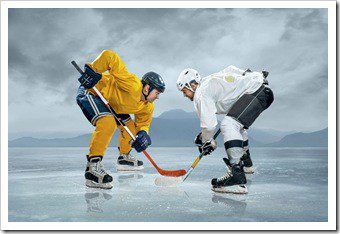
The smell of the ice. Some find no bigger pleasure as the sweet cold smell reaches our nose and begins the adrenaline rush for the upcoming hockey season. If you are one of the many fans you are aware that hockey can be an action packed game that comes with several health risks due...
Read More >>
by Dr. Brandon Chorney | Nov 4, 2014 | Health Articles
Are you one of the new generation that suffers with arthritis but refuses to accept to sit on the sideline? If so read on! Understanding the Arthritis Myths Years ago, arthritis was considered an inherent part of the aging process and a signal to a patient that it's time to slow down. But not so...
Read More >>
by Dr. Brandon Chorney | Oct 30, 2014 | Health Articles
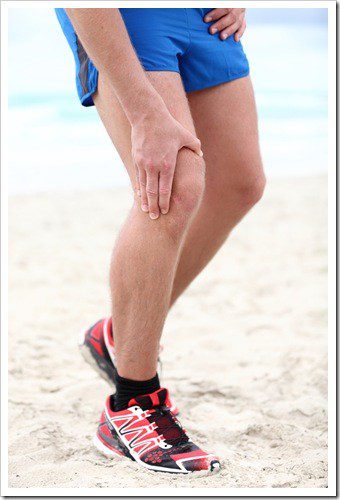
When you bend your knee do large clicks and cracks resonate around you? Do you frequently stop because your knee locks or feels like it just is not bending correctly? Ahh the grinding you say! You are not alone. Many people struggle with long standing knee pain and discomfort. It is far to common and...
Read More >>
by Dr. Brandon Chorney | Oct 28, 2014 | Health Articles
Red carpets and fashion runways are a designers dream come to life. For the fashion savvy we watch in awe and try to duplicate in our own lives. One accessory without fail that arrives each season is the undeniably loved high heel.
We love to wear them and can even convince ourselves that they are comfortable and do not hurt our feet. But our feet should not be looked at as the only area of our body that we are compromising.
The Cost of Fashion
The truth of fashion is that it caters to a world that does not really exist. Who would walk out onto the street in a six-foot high hat and eight-inch heels besides the lovely ladies in Sex in the City? Even many of those toned-down items that make it into the high street stores are not really suitable for everyday wear. All it takes to cause pain and potentially long-term problems is to venture out too many times in high heels with a heavy bag slung over one shoulder. The legs, the back, the shoulders, spine and neck can all suffer in your pursuit of fashion.
The Sneaky Stiletto
High heels are the worst culprits in the line-up because they so badly alter a person’s natural balance, throwing all sorts of stresses and strains into vulnerable parts of the body. It is not just the feet that suffer in high heels. The dynamic equilibrium enjoyed by a well-balanced body is ruined by high heels, and unnatural compensations take place in the body, with new movements, alignments and restrictions.
In a nutshell, high heels increases the normal forward curve of the spine and also tip the pelvis forward. The body’s center of gravity shifts as a result. Standing bare foot allows a person to be perfectly balanced, as nature intended, with the hamstrings supporting the pelvis as they should. High heels, on the other hand, encourage the hamstrings to shorten.
Other Fashion Victim Accessories
Next on the fashion runway of pain are clothes that are too tight. When the bodies movement is restricted and or changed, the body has to compensate.
Following not far behind in the guilty line-up is heavy bags, purses, backpacks or briefcases, and the people who load into them far too much stuff. A bag that weighs more than 10% of your body weight causes the body to become imbalanced, especially when it is carried over one shoulder or in one hand, because the natural tendency is to lift up the carrying shoulder and lean the body to the opposite side to compensate. The legs and arms then become less coordinated and the spine curves towards the weight-bearing shoulder.
Now for the Men
Less serious is the practice of carrying a hefty wallet in your back pockets. Less serious perhaps, but more insidious in the fact that many people will not even give it a second thought. However, this can cause discomfort over a day, especially if you are sitting on it for part of the time because the muscle will be dented by the article, causing pain.
Fashion Forward
It may be hard, but you need to forgo certain fashions for the sake of your health, where those fashions are detrimental to your health. Keep in mind the following when choosing clothes, shoes and accessories.
- Choose comfortable shoes. When you go out in high heels, try and take a pair of flats with you to swap into if you become uncomfortable. If you want to wear high heels at work and you walk to work, take the heels in a bag and walk in flat shoes instead.
- If a shoe feels uncomfortable when merely standing, walking in it will be infinitely worse.
- Choose supportive shoes that have sufficient cushioning to make walking easy.
- Whatever shoes you are wearing, take regular breaks from sitting to stretch out the hamstrings.
- Don’t wear clothes so tight that they restrict your physical movements.
- Select a bag that allows you to carry it distributed evenly on your body, rather than over one shoulder. The strap should therefore be padded and long enough to place over the head.
- If the bag is on one shoulder or in one hand, swap it frequently from one side to the other to share the burden.
- Remove any unnecessary items from your bag to make it lighter.
- Remove your wallet from your back pocket when sitting or driving for any length of time.
- Suit your clothes to your everyday activities.
Remember that you can be stylish and healthy at the same time, and that shunning the latest fashion to protect your health is actually the most “EnVogue” thing you can do.
by Dr. Brandon Chorney | Oct 23, 2014 | Health Articles
The world as we know it stands in line for the next big thing to be here. That application can be applied to mobile phones, cars, etc. But should we really be applying this to our food? The Toxic Techno Truth Today our food has taken a new bionic makeover. Unfortunately to create these new...
Read More >>
by Dr. Brandon Chorney | Oct 21, 2014 | Health Articles
The vision of success and victory are measured by the successes of not only receiving high marks but how consistently a team or program can achieve the high marks of success. As we cheer and stare in awe at our athletes we often look at the days well done performance without looking at all the...
Read More >>
by Dr. Brandon Chorney | Oct 16, 2014 | Health Articles
When you or someone you love suffer with chronic pain it is not only physically debilitating but physically exhausting. You sit over your computer searching for anything that may take the pain away. At first you would never expect to find a long lasting or permanent solution and are willing to settle for a solution...
Read More >>
by Dr. Brandon Chorney | Oct 14, 2014 | Health Articles
Ahh! One of our favorite holidays is here - Halloween! Children young and old have always loved the sweets and treats that accompany this day of ghoulish delights. The sweets of course are full one of the most addictive substances on earth. That's right - sugar. Sugar by itself is natural and provides pleasant sweetness...
Read More >>

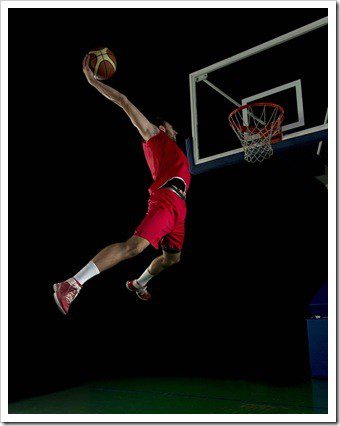 Basketball season is about to begin! Whether we play professionally, for a school team, or for a league on Sunday, one on point game plan should be to invest in the proper shoes to avoid future injuries and unnecessary pain.
 One of the most beautiful sites for many of us is the majestic colors that adore our trees as the sign of the autumn season. As we know that this beauty is brief for the trees soon lose their leaves and decorate our lawns with piles of wonderful less exciting dead debris. That beauty also comes at a price for our back, neck, and shoulders as we sweep, gather, and dispose of the leaves more than once this season. So if your home is subjected to leaves falling each year, follow these helpful tips and avoid the consequences of leaf-raking on the body, including strain and pain in the neck, the upper and lower back, and the shoulders.